
627 읽음
Don’t Turn a Husband’s Grief Into a Conspiracy
 최보식의언론
 1
1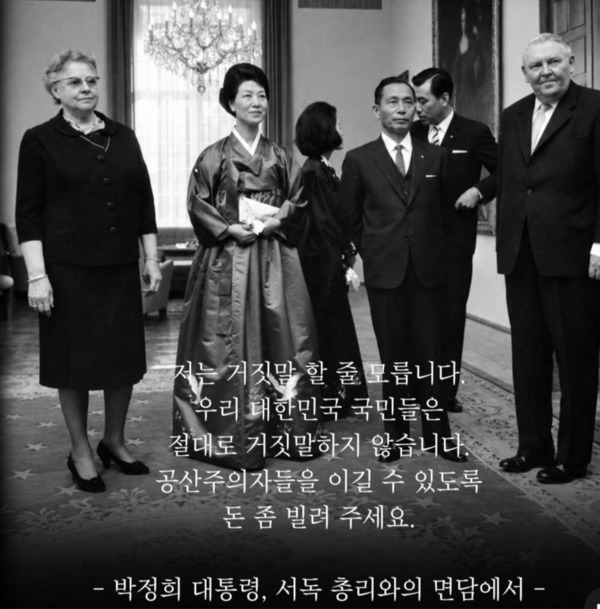
I have lived in the United States for nearly 30 years. Yet not a single day has passed when I have forgotten my homeland, the Republic of Korea. The farther away I live, the more clearly I see my country’s history, and the more sensitive I become when I see that history treated carelessly.
Today, I am not talking about health. I want to state clearly my position on what is happening in Korea today—as a physician, as an overseas Korean, and above all, as someone who respects facts. This is a long essay. But this is not an issue that can be addressed briefly, so I ask you to read it to the end.
On September 23, director Hur Jin-ho’s film The Assassin(s) was released in Korea. It deals with the shooting of First Lady Yuk Young-soo during the Liberation Day ceremony on August 15, 1974.
The film leads viewers toward the possibility that the tragedy was not simply the act of a terrorist acting under North Korean orders, but may instead have been a self-orchestrated operation planned and covered up by the Korean Central Intelligence Agency, then an intelligence organization directly under the president.
Even the title is not The Assassin but the plural The Assassin(s), with the plural placed in parentheses. From the title itself, it suggests that there may have been someone else behind Moon Se-gwang, the man who fired the gun.
I cannot accept what this film implies. And I will explain why—not through emotion, but through facts and logic. An argument based only on emotion cannot persuade those who disagree.
I will address, one by one, every counterargument that defenders of this film might raise, and explain why I believe those arguments ultimately fail. 붙여넣은 마크다운
On the morning of August 15, 1974, the 29th Liberation Day ceremony was held at the National Theater in Jangchung-dong, Seoul. President Park Chung-hee was delivering his commemorative address from the podium, while First Lady Yuk Young-soo sat behind him on the stage, dressed neatly in a hanbok. About 1,600 people were in the audience, and the ceremony was being broadcast live nationwide on television and radio.
During the speech, a dull sound came from the audience. Moon Se-gwang, a Korean resident of Japan, had accidentally shot himself in the thigh while pulling a handgun from his clothes. He immediately rushed into the aisle and fired toward the podium. The president ducked behind the lectern. Gunfire followed amid the confusion, and First Lady Yuk Young-soo was shot in the head and collapsed.
She was rushed to Seoul National University Hospital and underwent major surgery, but died that evening. She was 49. Jang Bong-hwa, a 17-year-old second-year student at Seongdong Girls’ Vocational High School who had been performing with the choir, also lost her life in the tragedy.
Many Koreans still remember what happened afterward. Once the shooting had stopped and the First Lady had been carried away, President Park returned to the podium and finished the speech that had been interrupted. Afterward, he was reported to have picked up his wife’s rubber shoes and handbag from the stage before leaving. The nation watched.
Moon Se-gwang was born in Osaka, Japan, in 1951. South Korean investigators announced that he had been recruited and instructed by a Chongryon official to prepare an assassination attempt against President Park Chung-hee.
A month before the shooting, in July 1974, Moon stole a police officer’s handgun from the Kozu police box in Osaka and entered South Korea using a passport issued in a Japanese citizen’s name. According to the essay, Japanese police confirmed the theft of the handgun. It was that weapon that was fired at the National Theater.
The incident plunged South Korea-Japan relations into one of their worst crises since diplomatic normalization. The perpetrator had grown up in Japan, stolen a Japanese police handgun, and entered South Korea using a Japanese passport. The Japanese government eventually sent an envoy to Seoul carrying a letter from Prime Minister Kakuei Tanaka to express regret.
Moon was sentenced to death through the first trial, appeal and Supreme Court proceedings, and was executed on December 20 that year. The South Korean court concluded that First Lady Yuk died from a bullet fired by Moon.
The essay also points to an episode from May 2002, when former President Park Geun-hye, then leader of the Korea Future Union, visited Pyongyang. According to the account, North Korean leader Kim Jong-il expressed regret over the 1974 incident, saying people below him had been involved but that he had not known about it beforehand.
The writer interprets this as a de facto acknowledgment that people on the North Korean side had been involved. He contrasts it with North Korea’s earlier claim that the incident had nothing to do with Pyongyang and was a South Korean fabrication.
To be fair, the film does not directly depict President Park ordering his wife’s death. Instead, it follows fictional characters—a detective pushed aside by the official investigation and journalists confronting those in power—as they pursue questions about the number of gunshots, missing bullets and lax security.
The narrative ultimately leads viewers to consider whether the KCIA may have planned or exploited the incident. Even the gunman’s name is altered by one syllable, from Moon Se-gwang to “Moon Tae-gwang.”
So I ask: Whose agency was the KCIA in 1974?
It was directly under the president. Its director was appointed by the president and reported directly to him. The idea that an agency directly under the president could have planned an incident at a national ceremony attended by the president—an incident in which the president’s wife was killed—without the president knowing, does not make sense to me.
The moment the film implies a KCIA operation, suspicion inevitably points toward the president who stood above that organization. Viewers are not fools. Even if the film never says his name, they know who stood at the end of that chain. That is why talk of a “Park Chung-hee behind-the-scenes theory” has erupted in Korea.
The director himself appeared conscious of this issue, saying in a broadcast interview that he did not think the president would have ordered it. To me, that statement exposes the film’s most serious contradiction. If the director himself does not believe the president was involved, why make a film suggesting a self-orchestrated operation by an agency directly under the president? Why deliberately use a plural title?
What a director says in an interview does not remain in viewers’ minds after they leave the theater. What remains is the suspicion that the screen has built up over two hours. A creator bears responsibility through the work itself, not through an interview.
The first argument from defenders of the film is: “The movie did not conclude anything. It merely raised questions.”
That, in my view, is precisely the problem.
If someone asserts something as fact, we can examine the evidence and determine whether the claim is true or false. Implication is different. Implication leaves suspicion behind without assuming the burden of presenting evidence. If you say, “This happened,” you must prove it. But if you say, “Could this perhaps have happened?” you do not have to prove anything. Yet the same suspicion is planted in the audience’s mind.
Medicine works the same way. If I tell a patient, “You have cancer,” I need biopsy results. But if, without test results, I repeatedly tell a patient for two hours, “Could it perhaps be cancer?” and drive that person into fear, that is not medical care. It is harm.
A suspicion raised without evidence is not necessarily less damaging than a definitive accusation. Because there is no clear assertion to rebut, it can remain longer and sink deeper.
When a film uses real people and real events and then says, “We never asserted anything,” that can become a way of avoiding responsibility. If you are not prepared to present something as fact, you should think carefully before building the story around real people and actual historical events.
Yes. There are unresolved questions.
The late Lee Kun-woo, who participated in the investigation as head of the Seoul Metropolitan Police forensic unit, said in a 1989 magazine interview that based on bullet marks at the scene, he believed Moon’s bullet had not struck First Lady Yuk. He also claimed that the Presidential Security Service had collected the bullet before the on-site investigation.
Later television documentaries and acoustic-analysis studies raised the possibility that the bullet that struck the First Lady may have been fired from the security detail attempting to subdue Moon. Questions have also been raised about the documentation surrounding the recovery and forensic examination of the bullets.
I do not deny that these questions exist. Nor do I oppose efforts to investigate them fully.
But we must distinguish what those questions actually point to.
They could point to the possibility that, amid a chaotic exchange of gunfire, a security guard’s bullet struck the First Lady, and to the possibility that the security apparatus may have handled evidence poorly in an attempt to conceal such a failure.
That would be a question of a security failure and possibly an institutional attempt to cover up that failure.
It is entirely different from saying that someone planned to kill the First Lady.
Even if we assume for the sake of argument that the bullet came from a security guard’s gun, why was that guard firing? Because Moon Se-gwang had emerged with a gun and was firing toward the president. Had Moon not done so, there would have been no gunfire at that moment.
An accidental shot by a security guard would be an accident, not evidence of a conspiracy. Even if someone later attempted to conceal such an accident, that would be an issue of responsibility and concealment—not by itself proof of a planned killing.
Taking a factual fragment—questions surrounding an accidental shot—and connecting it to the conclusion of a “planned assassination” is, in my view, how conspiracy theories are often constructed. Individual questions may be legitimate. But the lines connecting those questions must be drawn by evidence, not imagination.
Moon entered the venue without the required admission pass. It was unquestionably a shocking security failure.
But history shows that security failures often arise from arrogance, complacency and human error rather than conspiracy. President John F. Kennedy rode in an open-top car within range of an assassin in 1963. President Ronald Reagan was shot just meters from a hotel entrance in 1981. Indian Prime Minister Indira Gandhi was assassinated by her own bodyguards in 1984.
Even countries with sophisticated security systems have suffered catastrophic failures.
After the 1974 shooting, Presidential Security Service chief Park Jong-gyu resigned. He was replaced by Cha Ji-chul. Five years later, in 1979, President Park himself was shot dead amid conflict within the ruling establishment.
If the 1974 tragedy had truly been a plan devised by those in power, the result of that “plan” was the death of the president’s wife, the resignation of his security chief and, ultimately, a chain of events leading toward the president’s own violent death.
Conspiracy theories often ask: “Who benefited?”
So I ask the same question: What did President Park gain from this tragedy?
Some argue that the incident intensified anti-communist and anti-Japanese sentiment and therefore produced political benefits for the government. Historians have also discussed ways in which the government politically used the tragedy.
But exploiting a tragedy and creating that tragedy are entirely different things.
If a politician praises firefighters after a fire, that does not mean the politician started the fire.
President Park lost his wife of 24 years. His three children lost their mother. The government lost one of its warmest public faces. According to people who remembered the period, the Blue House became more closed and rigid after Yuk’s death.
And there is an even more basic question: At whom was Moon Se-gwang’s gun pointed?
At the president.
Bullets were fired toward the podium, and Park ducked behind the lectern. The premise that a man would devise a plan to kill his own wife at a nationally televised event, in front of 1,600 witnesses, while placing his own life in the line of fire is, to me, neither logical nor plausible.
Fifty-two years have passed since the shooting.
South Korea has changed governments many times. Political forces fiercely critical of the Park Chung-hee government have repeatedly come to power. State institutions have investigated historical controversies, and the National Intelligence Service, successor to the KCIA, has investigated and disclosed past covert operations.
Countless journalists, researchers and broadcasters have examined this case.
Yet, the writer argues, no document, testimony or recording has emerged proving that President Park planned or participated in his wife’s death.
The burden of proof belongs to the person making the allegation. That is a principle of law, science and medicine.
If one wishes to imply that the president was involved, evidence supporting that implication should be produced.
The film has also been criticized for portraying Moon’s theft of a handgun from an Osaka police box as though it were false.
The essay argues that the theft was confirmed by Japanese police and investigated by Japanese authorities, and that Japan subsequently sent an envoy to express regret over the incident.
Raising questions about genuinely unresolved issues is one thing. Depicting matters that investigators in both countries had treated as established as though they were fabricated is another.
The former is inquiry. The latter, the writer argues, is distortion.
One of the most common defenses is: “Film is creative work, and creative work is protected by freedom of expression.”
I value freedom of expression deeply. I live in the United States, where freedom of speech is enshrined in the First Amendment.
But freedom of expression is not unlimited. South Korean criminal law also separately addresses defamation of the deceased, precisely because dead people cannot answer accusations themselves.
President Park, who died in 1979, cannot hold a press conference, file a response or explain himself in his own voice.
The film’s director and production team have, according to the essay, been accused in a criminal complaint of defamation by alleging false facts, while the Park Chung Hee Presidential Memorial Foundation has demanded an official apology and an end to screenings.
I ask defenders of the film a serious question.
If a movie about another former president’s death implied that his family or close associates might have been behind it, would you still accept it simply as freedom of expression? If a movie suggested that the closest family members of someone you respected may have been responsible for that person’s death, would you still say, “It is only a movie”?
If not, the same standard should apply here. A principle that changes depending on the political identity of the person involved is not a principle. It is partisan logic.
Some will say: “Park Chung-hee was a dictator, so he deserves this kind of criticism.”
I want to answer that argument carefully but clearly.
I am not saying President Park had no dark side. The Yushin system, prolonged rule, suppression of democracy and human-rights abuses are matters that history must judge rigorously. People suffered during that period, and their suffering deserves respect.
A mature society should assess both the achievements and failures of a historical figure.
But criticizing a man’s rule and accusing him of involvement in his wife’s death are entirely different matters.
The first is historical judgment. The second is an accusation about a specific act. Political criticism does not justify attributing to someone things he did not do.
If you truly seek historical truth, criticism itself must rest on facts. Falsehoods weaken legitimate criticism. Whether left or right, progressive or conservative, we should demand evidence before turning the private tragedy of the dead into a conspiracy.
Park Chung-hee and Yuk Young-soo married in Daegu in December 1950, during the Korean War. Yuk, who had grown up in a relatively well-off family in Okcheon, North Chungcheong Province, chose Park, then a poor and taciturn military officer, despite reported opposition from her family.
For 24 years, she remained beside him as the wife of a soldier and later of a president. They raised three children.
Those who were around Park after his wife was shot on August 15, 1974, recalled that he appeared stunned and devastated. On the day of the funeral, as the hearse left the Blue House, the president was seen weeping and struggling to let go.
He later wrote of his longing for his wife in diaries and poems—the empty room without her, the flower garden she had tended, the sense that he could still hear her voice. He frequently visited her grave and reportedly sat there alone for long periods.
Five years later, on October 26, 1979, President Park himself was killed by gunfire. Today the couple lie side by side at Seoul National Cemetery.
To imply that the husband may have engineered his wife’s death—I do not call that “creative imagination.” I call it an insult.
And that insult does not affect only the dead. Their three children are still alive. They lost their mother 52 years ago, and now they are being confronted with the suggestion that their father might have killed her.
It turns one family’s greatest tragedy into a weapon aimed at that family once again.
Yuk Young-soo was more than the president’s wife.
She read letters sent by ordinary citizens to the Blue House and followed up on stories of injustice. She relayed public complaints and uncomfortable truths to the president, earning the nickname “the opposition party inside the Blue House.”
She visited Sorokdo and a leprosy settlement in Eumseong and held the hands of Hansen’s disease patients with her bare hands at a time when they faced extreme social discrimination.
She organized volunteer activities through the Yangjihoe association and established the Yukyoung Foundation, which built the Children’s Center on Namsan and published a children’s magazine.
As a doctor, I hold my patients’ hands every day. For nearly 30 years, I have seen how healing it can be simply to reach out to someone who is suffering. I believe the moment when the First Lady held the hands of people with Hansen’s disease carried a power stronger than medicine.
To turn her death into material for a political conspiracy, in my view, tramples on the warmth and dignity she sought to embody throughout her life.
We should also remember what President Park did for the country, while avoiding exaggeration.
In the early 1960s, South Korea was one of the world’s poorest countries, devastated by Japanese colonial rule and the Korean War. Per-capita income was below $100, and much of the country depended on American aid.
Under Park, South Korea pursued five-year economic development plans and an export-oriented industrial strategy. Exports reached $100 million in 1964 and surpassed $10 billion in 1977. By 1979, the year Park died, per-capita national income had risen above $1,600.
One symbol of that transformation was the Gyeongbu Expressway. Construction began in February 1968, and the 428-kilometer highway connecting Seoul and Busan opened in July 1970.
The Saemaul Movement, launched in 1970, sought to transform rural communities. The movement’s archives were inscribed on UNESCO’s Memory of the World Register in 2013.
During the same period, South Korea established the foundations of its steel industry through Pohang Iron and Steel, expanded heavy and chemical industrial complexes in Ulsan, Changwon and Gumi, and pursued large-scale reforestation.
I do not attribute all these achievements to Park Chung-hee alone. South Korea’s transformation was built by countless citizens working in factories, construction sites and fields, and by Koreans laboring far from home.
But neither should the role of political leadership in directing those efforts be erased.
There is one part of this history that moves me deeply: the Korean miners and nurses who went to West Germany.
First, one myth should be corrected. A widespread internet story says President Park obtained German loans by using the wages of Korean miners and nurses as collateral. That is not accurate.
The first West German loan agreement was signed in 1961. Korean miners began going to West Germany in 1963, while the government-organized dispatch of nurses expanded later. The loan came first; the workers came afterward.
I will not rely on exaggerated myths. If I criticize distortion in this film while exaggerating history myself, everything I say loses credibility.
From 1963 through the late 1970s, about 8,000 miners and more than 10,000 nursing personnel went to West Germany. The miners worked deep underground amid heat and coal dust. Nurses endured the hardest jobs in hospitals where they initially struggled with the language. They sent their earnings home, supporting their families and bringing valuable foreign currency into Korea.
In December 1964, President Park and First Lady Yuk made a state visit to West Germany, the first European visit by a South Korean president. They met President Heinrich Lübke and Chancellor Ludwig Erhard to seek cooperation for South Korea’s economic development.
On December 10, the presidential couple visited the Hamborn mine in the Ruhr industrial region. Korean miners and nurses gathered in an auditorium. As an ensemble of miners began playing the Korean national anthem, the singing reportedly grew increasingly unsteady and dissolved into tears.
Park is said to have put aside his prepared speech and spoken about not passing poverty on to future generations, only to become too emotional to continue. Park cried. Yuk cried. The miners and nurses cried.
Yuk reportedly took the nurses’ hands one by one afterward to comfort them. 붙여넣은 마크다운
Think about it again.
The woman who stood beside her husband in that Hamborn auditorium, crying with him and embracing fellow Koreans thousands of miles from home—is now being presented in a story that asks whether that same husband might have been behind her death 10 years later.
I cannot accept that.
This is personal to me. I, too, left Korea and built a life in a foreign country, struggling with language, education and work. I still remember the loneliness of my early years in America.
Here in Los Angeles, there are elderly Koreans who first worked as miners and nurses in West Germany before eventually coming to the United States. Some have been my patients.
When I treat their bent fingers and worn knees, I see history written into their bodies.
To them, Park Chung-hee and Yuk Young-soo are not merely figures in textbooks. They are people who traveled halfway around the world and cried with them.
That is one reason I felt I had to write this essay.
“It’s Only a Movie”
Some may say: “Why are you so sensitive? It is only a movie.”
But according to the essay, the film drew more than 1.5 million viewers within five days of release and ranked No. 1 at the box office for five consecutive days.
A film based on real people and an actual historical event can be received by audiences as history. For younger generations who did not live through the period, a two-hour film can leave a stronger memory than ten history textbooks.
People now in their 20s and 30s cannot personally remember August 15, 1974.
If this film is their first encounter with the incident, what image will remain?
Not necessarily the face of Moon Se-gwang, but the shadow of a government hiding something. Not North Korean involvement, but a KCIA operation. And at the end of that chain of suspicion, the face of the president.
Once suspicion has been planted, it is difficult to erase.
That is why creators dealing with real people bear a heavier responsibility. Imagination is free. But when imagination is directed toward damaging the reputation of people who can no longer answer for themselves and reopening the wounds of surviving family members, I do not believe it can be dismissed simply as art.
What has angered me even more than the film itself is the attitude of the ruling Democratic Party.
When controversy arose over alleged historical distortion, Democratic Party Supreme Council member Choi Min-hee defended the film as fiction and indicated that people should go see it. Yet she did not give a clear answer when asked whether the film distorted history.
The party also characterized criticism of the movie as “political maneuvering” and opposed calls to summon the director to a National Assembly audit to question him about how the film was made.
I do not reject the principle that politics should not interfere with creative work. A society in which political power censors movies is not healthy.
But defending freedom of expression is different from leaders of the ruling party publicly defending a controversial film and encouraging people to watch it.
If the party genuinely believes politics should not interfere with art, its leadership should not intervene on the film’s behalf either.
There is also the question of consistency.
The essay argues that a year earlier the Democratic Party publicly criticized The Birth of Korea 2, a film dealing with the Jeju April 3 events, as historical distortion. At the time, the party did not invoke freedom of expression.
I am not addressing here whether that criticism was right or wrong. My question concerns the standard.
Is a film presenting a historical interpretation you reject “historical distortion,” while a film implying a conspiracy harmful to your political opponents becomes “freedom of expression”?
If the standard depends on whom the movie politically benefits or harms, it is not a principle. It is partisan logic.
The ruling party is not merely another political faction. It bears responsibility for governing the country.
When a senior ruling-party figure encourages people to watch a movie about the death of a former president’s wife while declining to address questions of historical distortion, that statement carries political weight.
In my view, it is irresponsible, and the public deserves an explanation.
Let me conclude.
On August 15, 1974, Moon Se-gwang fired toward the president at the National Theater. He entered South Korea carrying a handgun stolen from a Japanese police box and a passport issued under another person’s name. South Korean investigators announced that he had acted under instructions linked to Chongryon and North Korea, and a South Korean court sentenced him to death.
Questions remain about the bullets fired at the scene. Those questions deserve investigation.
But questions about security failures or the possibility of accidental gunfire are not, by themselves, evidence that the president planned his wife’s death.
And over the 52 years since the tragedy, the writer argues, no evidence has emerged demonstrating that President Park was involved in planning his wife’s death.
I therefore make three requests.
To the filmmakers: If you have evidence that the president was involved in his wife’s death, produce it. If such evidence exists, I will be among the first to accept it humbly. But if you cannot produce it, apologize to the bereaved family and the public for turning a husband’s grief into a conspiracy.
To Choi Min-hee and the Democratic Party leadership: Explain your defense of the film and your encouragement that people watch it. Apply the same standard of historical accuracy that you have demanded of other films and state clearly whether you believe this film distorts historical facts.
And to those who have seen the film, or plan to see it, I make not a demand but a request:
Watch the film as a film—but check history against the historical record.
History must be honest. Criticism must stand on facts, and imagination must respect facts.
I recognize both the achievements and the failures of President Park Chung-hee. But condemning him for something he did not do is not criticism. It is a distortion of history.
Please tell our children and younger generations what happened that day.
Tell them about a husband weeping before his wife’s coffin; about the president who returned to the podium to finish his interrupted Liberation Day address and then walked away carrying his wife’s rubber shoes; about the Korean national anthem dissolving into tears in a mining hall in Hamborn; about the workers who died building the Gyeongbu Expressway; about the warm hands of a woman who held the hands of people with Hansen’s disease.
And please do not forget 17-year-old Jang Bong-hwa, who also lost her life at the National Theater that day.
May First Lady Yuk Young-soo, President Park Chung-hee and Jang Bong-hwa rest in peace.
And I offer my deepest gratitude to all those who shed their sweat and tears for Korea during those difficult years.
#TheAssassins #ParkChungHee #YukYoungSoo
* This article has been translated by ChatGPT.