
305 읽음
트랙터 대신 말을 몰았던 미국의 ‘미친 농부’... 웬델 베리의 삶
 최보식의언론
 0
0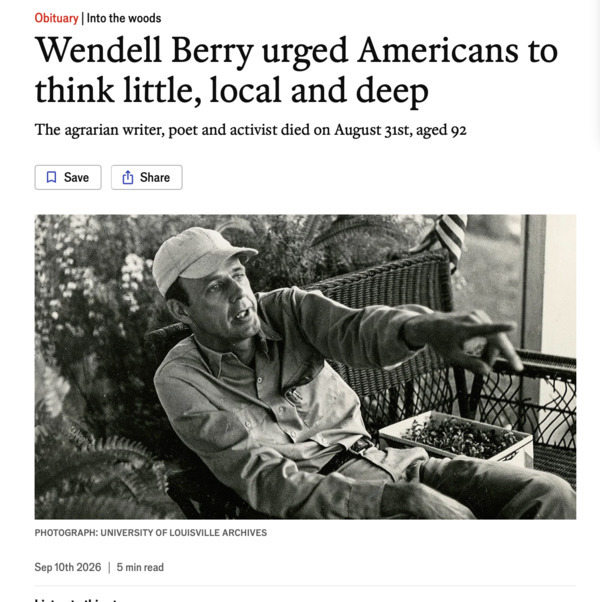
영국 이코노미스트誌는 10일 자 ‘Wendell Berry urged Americans to think little, local and deep’(웬델 베리, 미국인들에게 “작게, 지역적으로, 깊이 생각하라”고 외치다)라는 제목의 기사에서 고인을“'미친 농부(mad farmer)'이자 세상의 흐름을 거스르는 사람”이라고 평했다.
이코노미스트는 “뉴욕에서 영문학 교수로 일했던 그는 도시를 떠나 1803년부터 가족이 농사짓던 켄터키의 땅으로 돌아가 평생 농부이자 작가로 살았다”며 “베리는 ‘진보’와 이윤을 앞세운 산업화가 숲과 표토를 파괴하고 소농과 지역공동체를 무너뜨렸다고 비판했다”고 소개했다.
이어 “베리는 세계경제와 자유시장에 대해서도 인간을 거대 기업과 제도에 종속시킨다며 비판적이었다”며 “그가 제시한 대안은 거창하지 않았다. ‘크게 생각하라(Think Big)’가 아니라 ‘작게 생각하라(Think Little)’”고 강조했다는 것이다.
그러면서 “자기 손으로 일하고 이웃과 협력하며 지역에서 생산된 것을 소비하고 자신이 딛고 사는 땅을 제대로 돌보자는 것이었다”며 “지구를 구하는 일 역시 거대한 구호보다 각자가 감당할 수 있는 작은 실천에서 시작해야 한다고 믿었다”고 보도했다.
실제로 고인은 그러한 사상을 삶에서 실천했는데 “노천채굴한 석탄에 대한 의존을 줄이기 위해 낮에만 글을 썼고 컴퓨터 사용을 거부했다”는 것이다. 이러한 개인적 저항은 작아 보였지만 베리는 ‘1960년대 이후 켄터키의 화석연료 의존에 반대해 벌였던 대규모 시위보다 오히려 이런 작은 행동이 더 효과적일 수 있다’고 생각하고 실천했다. 대중운동은 근본적인 문제가 해결되기도 전에 유행처럼 번졌다가 사라지는 경우가 많았기 때문이라는 것이다.
아래는 이코노미스트의 해당 기사 전문이다. (편집자)
집 안에서 더 이상 생각이 풀리지 않을 때면 웬델 베리는 숲으로 향했다. 너무나 익숙한 길이라 머리로 길을 찾기보다 발이 저절로 그를 이끌었다. 숲에 들어서면 신기하게도 모든 것이 제자리를 찾았다. 그는 고요하고 위엄 있는 나무들 사이에서 겸허해졌고, 나뭇잎 사이로 쏟아지는 햇빛을 바라봤다. 자신의 삶도 곤충과 새를 비롯한 숲의 수많은 생명 가운데 하나가 됐다.
주머니에서 연필과 아무 종잇조각이나 꺼내 들면 다시 글을 쓸 수 있었다. 글의 소재는 따로 찾을 필요가 없었다. 필요한 모든 것이 바로 그를 둘러싸고 있었기 때문이다.
그는 뉴욕에서 살 수도 있었다. 28세 때 뉴욕에서 영문학 조교수로 임용됐다. 하지만 자신이 도시에서 살아갈 사람이 아니라는 것을 알고 있었다. 무엇보다 자신은 켄터키를 떠날 수 없다는 사실을 깨달았다.
켄터키주 헨리카운티, 블루그래스 고지대 가장자리에는 '대략 12에이커'의 작은 땅이 있었다. 그의 가족은 1803년부터 그 땅에서 농사를 지었다. 학교에 진학하기 전까지만 해도 베리는 자신 역시 농부의 길을 따를 것이라고 확신했다.
어린 시절 그는 노새의 힘을 가늠하는 법을 배웠고, 이슬에 발굽을 적신 노새들을 몰아 골짜기 비탈의 담배밭으로 올라가는 방법도 익혔다. 빌이라는 흑인 일꾼에게서는 다람쥐를 소리 없이 뒤쫓는 법을 배웠다.
지역에 뿌리내리고 이웃과 함께하며 아무것도 낭비하지 않는 농촌의 삶이 지닌 가치는 그의 내면에 깊이 새겨졌다. 결국 그는 고향으로 돌아올 수밖에 없었다. 이후 수십 년 동안 책과 기사, 시를 통해 미국인들에게 그 가치를 이해시키려고 노력했다.
“진보”라는 이름으로 파괴된 땅
베리는 미국이 변해가는 모습을 깊이 슬퍼했다.
'진보'와 이윤 추구라는 이름 아래 숲은 베어졌고, 자신이 살던 켄터키강 유역을 비롯한 수많은 유역은 포장되고 개발돼 물을 머금을 능력을 잃었다. 자연의 지형을 따라 이어졌던 인간적인 규모의 길은 폭력적으로 직선화돼 주간고속도로가 됐다. 산업화된 농업은 토지를 황폐하게 만들었다.
스스로 먹고살 수 있었던 작은 농장들은 폐허가 됐고, 거대 기업들은 멀리 떨어진 곳에서 생산한 음식으로 미국인들의 식탁을 채웠다. 베리의 눈에 중공업이 자연이라는 신성한 선물과 창조의 신비에 돌려준 것은 감사와 보살핌이 아니라 유독성 폐기물이었다.
그가 무엇보다 안타까워한 것은 표토(topsoil)의 상실이었다.
부식토는 과거를 단순한 역사가 아니라 미래의 가능성으로 품고 있었다. 수천 년 동안 떨어진 나뭇잎과 썩은 유기물이 쌓여 만들어낸 풍요로운 흙이었다. 언젠가 자신의 몸 역시 그 흙으로 돌아가 그 일부가 될 것이었다.
그러나 그의 농장에서도 표토는 무릎 깊이, 어떤 곳에서는 어깨 높이에 이를 만큼 사라졌다고 그는 추산했다. 흙이 사라진 곳에는 노란 점토가 드러났고, 어떤 곳에는 바위만 남았다. 석탄 산업에 의존하던 켄터키의 다른 지역에서는 노천채굴을 위해 산 전체가 폭파되기도 했다.
베리는 울타리 기둥에 걸려 있던 할아버지의 낡은 양동이에서 희망을 발견했다. 수십 년의 세월 동안 자연은 그 양동이 안에 몇 인치 두께의 비옥한 검은 흙을 만들어 놓았다. 그러나 인간의 탐욕이 속도를 요구한다고 해서 자연의 복원 작업까지 서두르게 할 수는 없었다.
트랙터 대신 말을 몰았던 ‘미친 농부’
베리 자신의 농사도 서두를 수 없었다.
가족의 농가인 '레인스 랜딩(Lane's Landing)'은 베리와 아내 타냐가 들어가 살기까지 1년 동안 손을 봐야 했다. 욕실과 수도시설, 석유 난방기를 설치했지만 그는 얼마 지나지 않아 난방기를 장작 난로로 바꿨다.
비탈진 농장을 다시 생산적인 땅으로 만드는 일은 더 오래 걸렸다. 그의 선조들도 개척농민들이 흔히 저질렀던 실수를 했다. 갈아엎어서는 안 될 경사지까지 밭으로 만들었다. 베리 자신도 실수했다. 연못을 만들었다가 산비탈이 미끄러져 내려앉기도 했다.
훼손된 땅에 다시 풀을 심고 클로버를 뿌렸다. 농장은 75에이커까지 넓어졌고 닭과 젖소도 키웠지만 수입은 거의 나지 않았다. 켄터키대 교수직이 없었다면 가족의 생계는 어려웠을 것이다.
그래도 베리는 씨앗을 뿌리고 땔감을 구하러 나갈 때면 트랙터보다 경사지에 훨씬 적합한 말을 몰았다. 그리고 자신이 원했던 존재가 됐다는 사실에 기뻐했다.
'미친 농부(mad farmer)'이자 세상의 흐름을 거스르는 사람. “Think Big이 아니라 Think Little”
그런 사람으로서 베리는 미국 사회를 향해 거침없이 목소리를 냈다.
그에게 '세계경제(global economy)'는 허구에 가까웠다. 공산주의든 자본주의든 결국 다수가 아니라 소수에게 특권을 주는 체제라고 비판했다. '자유시장' 역시 탐욕의 영역을 확대하는 수단일 뿐이라고 봤다.
베리가 생각하는 진정한 자유는 기업이나 조직, 제도에 빚진 채 살아가지 않고 자신의 삶을 직접 통제하는 것이었다.
그러려면 자기 손으로 일하고, 이웃과 협력하며, 자신이 딛고 사는 땅의 생명과 질서를 배워야 했다.
세계경제가 아니라 지역경제였다.
'크게 생각하라(Think Big)'가 아니라 '작게 생각하라(Think Little)'였다.
작은 농부들이 바로 그렇게 살아가는 사람들이었다. 그래서 베리는 소농이 갈수록 사라지는 현실을 비극으로 여겼다. 그들에게 생산성은 최우선 가치가 아니었다. 그들은 땅을 최대한 많이 이용하기보다 땅을 제대로 이용하는 것을 중요하게 여겼다.
“지구를 구하는 일도 개인이 감당할 규모로”
비판자들은 베리가 과거를 낭만화하고 현실적으로 불가능한 삶을 권한다고 지적했다. 그는 강하게 부인했다.
과거에도 잘못된 선택은 많았고, 그 선택의 상당수가 오늘날의 문제를 만들어냈다는 것이다. 모든 사람이 자급자족할 수 없다는 사실도 인정했다.
그러나 도시 사람에게도 할 수 있는 일은 있다고 봤다. 현관이나 작은 공간에서 먹을거리를 키울 수 있고, 농민시장에서 지역 농산물을 살 수도 있다. 무엇보다 자신의 생활방식을 바꿀 수 있었다.
베리는 자신부터 그렇게 살았다. 노천채굴한 석탄에 대한 의존을 줄이기 위해 낮에만 글을 썼고 컴퓨터 사용을 거부했다.
이런 개인적 저항은 아주 작아 보였다. 하지만 베리는 1960년대 이후 켄터키의 화석연료 의존에 반대해 벌였던 대규모 시위보다 오히려 이런 작은 행동이 더 효과적일 수 있다고 생각했다.
대중운동은 근본적인 문제가 해결되기도 전에 유행처럼 번졌다가 사라지는 경우가 많았기 때문이다.
지구를 구하는 일도 결국 각 개인이 실제로 감당할 수 있는 규모로 줄여야 했다.
그에게 세계는 한 조각의 농장이었다
베리에게 그 규모는 자신의 농장이었다. 아주 작은 한 조각의 땅이었지만, 그곳은 그에게 세계 전체를 의미했다.
그는 농장에서 기쁨과 만족을 얻었지만 세상을 향해 격렬한 분노를 느끼기도 했다. 자신의 아이들에게 어떤 세계를 물려주게 될지 걱정했다.
그러나 자신이 선택한 땅에서 살아가는 동안에는 그 불안을 어떻게 다뤄야 하는지 정확히 알고 있었다.
그는 숲으로 갔다.
그의 시 「야생의 평화(The Peace of Wild Things)」에는 그런 삶의 태도가 압축돼 있다. 야생의 생명과 고요한 물가를 찾아가 인간의 근심에서 잠시 벗어나고, 보이지 않는 별빛 아래에서 세상의 은총 속에 쉬며 자유를 얻는 것이었다.
웬델 베리가 평생 미국인들에게 전하려 했던 메시지도 결국 그와 닮아 있었다.
크게 생각하기보다 작게 생각할 것. 멀리 있는 세계보다 자신이 사는 땅을 돌볼 것. 그리고 그 작은 장소를 깊이 사랑할 것.
「기사 원문」
When he could no longer think in the house, Wendell Berry would go to the woods. He went along paths so familiar that his feet led him, rather than his mind. Once there, by some miracle, everything fell into place. He stood humbled amid the serenity and dignity of the trees, watching the play of sunlight through the leaves. His life took its place among all the other lives of the wood, the insects and the birds. Taking from his pocket the tools of his work, a pencil and any old scrap of paper, he could resume writing. The only subject he needed was all around him.
He could have been in New York City. At 28, he had been appointed an assistant professor of English there. But he knew he was not made for urban places. Even more strongly, he realised that he could not escape Kentucky. A tiny patch of land, "12 acres more or less" in Henry County, at the edge of the high Bluegrass, had been farmed by his family since 1803. Before he went away to school, he was sure he would follow. He had learned as a child how to assess the strength of a mule and how to drive a team of them, hooves wet with dew, up to the tobacco plots on the sides of the valley. He knew, thanks to a black hired hand called Bill, how to creep silently after squirrels. The value of that locally rooted, neighbourly, waste-not-want-not agrarian life was so deeply engrained in him that he had to return. For decades, in books, articles and poems, he tried to persuade Americans to understand.
He deeply lamented what had been done to his country. In the name of "progress" and the pursuit of profit, forests had been felled and watersheds, such as his local one on the Kentucky river, paved over until they could no longer retain water. Human-scale paths, respecting the natural contours, had been violently straightened into interstates; industrialised agriculture had ravaged and denuded the land. Self-sustaining smallholdings were left as ruins, while giant corporations fed Americans on food grown far away. Heavy industry's return for the holy gift and mystery of creation was not thanks and care, but poisonous waste.
The loss of topsoil was what he regretted most. Humus held the past not as history, but as possibility, a richness built up from leaf-fall and decayings over thousands of years. This was what his body would sink into and become. Yet on his farm he reckoned that the loss was knee-deep, in places shoulder-deep. He felt its absence. Where it had been, yellow clay was at the surface, or sometimes bare rock. Farther away, in this coal-devoted state, whole mountains had been blown apart for strip-mining. He took heart from his grandfather's old bucket, still hanging from a fence-post, in which Nature over the decades had miraculously made a few inches of rich black earth. But where human greed demanded speed, Nature's restoration work could not be hurried at.
Nor could his. The family farmhouse, Lane's Landing, needed a year of work before he and his wife Tanya could move in. They installed a bathroom, plumbing and an oil furnace, though he fairly soon replaced that with a wood-burning stove. Getting his hilly farm productive again was a longer struggle. His forebears had made some typical eager-settler mistakes, such as breaking slopes that should never have been ploughed. He made his own, creating a pond that made the hillside slip. Even when he had grassed over the scars, sown clover, expanded to 75 acres and acquired hens and a milk-cow, it made very little income. Clearly they would not have survived without his post at the University of Kentucky. But as he set out to sow or find fuel, driving a team of horses that did better on his gradients than any tractor, he exulted in being what he needed to be: a mad farmer and a contrarian.
As such, he harangued America. The "global economy" was a nonsense: both communism and capitalism privileged the few, not the many. The "free market" was just a means to extend the scope of greed. True freedom was not to live in hock to any corporation, organisation or institution, but to directly control your own life. That meant working with your own hands, co-operating with your neighbours and learning the lives and ways of your own ground. Not a global economy, but a local one. Not "Think Big", but "Think Little". This was what small farmers did, which was why their dwindling numbers were a tragedy. Productivity was not a priority for them. They preferred to use the land well.
Critics accused him of romanticising the past and recommending the impossible. He strongly denied that. The past had also been full of bad choices, most of which had contributed to the present horrors. Of course, too, not everyone could be self-sufficient. But even city-dwellers had porches or entryways in which they could grow food. They could go to farmers' markets and buy local. Above all, they could change their ways of living. He himself wrote only by daylight and rejected computers, to reduce his dependence on strip-mined coal. Such individual protests, though tiny, might ultimately work better than the mass protests he had staged since the 1960s against Kentucky's addiction to fossil fuel. Public campaigns too often turned into fads that faded before the root problem was tackled. Saving the planet had to be reduced to the scale of each person's competence.
His scale was the farm, and that minute scrap of earth represented, for him, the whole. Amid his joys and satisfactions he also blazed with anger, and fretted over the sort of world he would be able to leave to his children. But living as he did, on his own patch, he knew exactly how to cope. He went to the woods.
I come into the peace of wild things who do not tax their lives with forethought of grief. I come into the presence of still water. And I feel above me the day-blind stars waiting with their light. For a time I rest in the grace of the world, and am free.
#웬델베리 #작게생각하라 #농본주의