
512 읽음
When Power Breeds Arrogance: A Warning for Lee Jae-myung
 최보식의언론
 0
0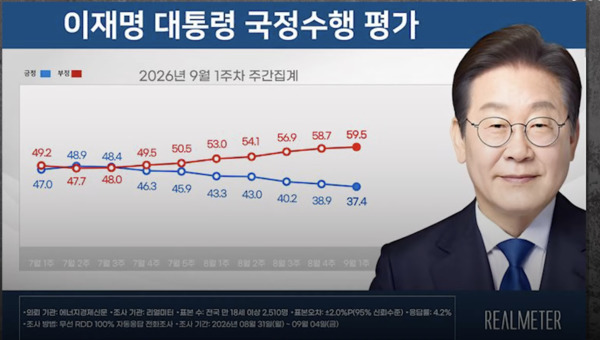
Yet those who reach the pinnacle of power invariably fall into the dangerous illusion that “I am different.”
When former President Moon Jae-in enjoyed an approval rating approaching 80% early in his presidency, or when President Lee Jae-myung led the country with strong and solid support exceeding 60%, did they and those around them ever once contemplate the possibility that public sentiment might turn against them and their approval ratings could plunge into the 30% range?
Having lived for many years as an ordinary citizen of this country and witnessed the rise and fall of successive governments, I find it deeply distressing and regrettable to watch yet another administration repeat the same arrogance despite knowing the path to ruin that history has demonstrated so many times.
President Lee Jae-myung recently warned that some are “obstructing reform in the name of reform,” characterizing criticism directed at him as resistance to reform. The moment a ruler treats voices opposing himself and his administration’s policies not as subjects for persuasion and compromise, but as entrenched interests resisting reform or enemies to be eliminated, that administration has already entered the opening stage of its end.
Once those in power fall into the arrogance of believing that they alone represent justice and goodness, even legitimate policy proposals that could help the administration are downgraded to malicious attacks by political opponents or anti-reform resistance. When a leader casts himself not as a democratic leader but as a judge who divides good from evil, and uses rhetoric that divides the public into opposing camps, it creates profound fatigue among voters and ultimately drives reasonable centrists away en masse.
Particularly dangerous is an approach to governing that denies reality even in the face of cries of distress from ordinary people, insisting that “our good intentions are being distorted by our political opponents.”
Following increases in home purchase prices, rents and jeonse deposits have surged, while excessive restrictions on lending have compounded the problem, effectively destroying the housing ladder for ordinary people. Even as turmoil in the property market reaches an extreme and public frustration erupts, the ruling camp insists that there is nothing wrong with its policies, disregarding the realities of supply and demand. The arrogance and stubbornness of good intentions that refuse to acknowledge failure only pour fuel on public anger.
The most serious problem is the fatal obstinacy within the government: even as the adverse effects of its policies and dysfunction in state affairs become increasingly apparent, those in power remain convinced that “there is nothing wrong with the direction of our government, and we are without fault.”
At a time when public criticism is mounting, instead of humbly accepting it, the government carried out a misguided cabinet reshuffle that failed to reflect public sentiment, choosing confrontation rather than renewal. This only poured more fuel on public anger. An administration that labels criticism as malicious attack and disables its own capacity for self-correction leaves itself with only one destination: self-destruction.
There is no such thing as an eternal approval rating, nor is there any government exempt from the lessons of history. The sea of public sentiment can float a ship, but it can also overturn an arrogant one at any moment. The very moment a government fails to recognize its policy failures and dismisses criticism as a distortion of its good intentions is the moment its downfall begins.
Having lived through the rise and fall of many governments, it is bitter to watch the hope that “perhaps this time will be different” turn once again into the disillusionment of “as expected,” as an administration races toward the tragedy of its own collapse.
The end of arrogant governments that forgot the historical truth that “power is finite,” used approval ratings and parliamentary seats as shields, and ignored warnings from the market and cries of hardship from ordinary people has always been predictable. There are no exceptions to the trajectory of a government that becomes consumed by arrogance and self-righteousness, rejects criticism, and turns itself into something beyond reproach.
Unless the Lee Jae-myung administration regains humility before the lessons of history and fundamentally changes the direction of state affairs, it appears all too clear that, like arrogant governments of the past, it too will collapse and meet an unhappy end.
jinannkim@gmail.com
#LeeJaeMyung #PoliticalPower #PublicTrust
* This article has been translated by ChatGPT.