
1,825 읽음
Hwang Sun Gave Birth to Her Daughter During a Visit to Pyongyang... Now the Daughter Storms a U.S. Military Base!
 최보식의언론
 0
0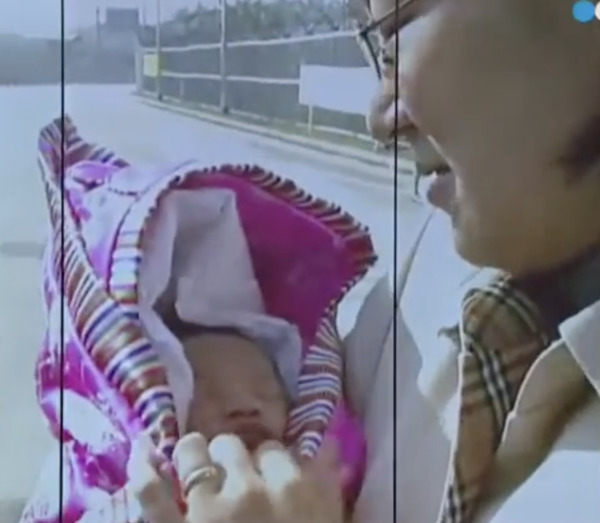
What caught my attention more than the incident itself was another fact: They really were students in their 20s.
For a long time, the name Daehakjinyeon had seemed like something of a contradiction in terms. Although it presented itself as an organization of “university students,” the conventional perception was that it was actually a fossilized remnant of the student movement of the 1990s—a group of professional activists long past their youth wearing the outer shell of students. But those who crossed the fence this time were not the “has-beens” of that stereotype. They were genuinely young people.
How does a 20-year-old who went through an ordinary school life in South Korea in 2026 come to embrace a “Jusapa-style worldview”?
Today’s younger generation knows the reality of the North Korean regime far too well to harbor illusions about it; even indifference toward it might seem a luxury. Within the trajectory of an ordinary life, there is virtually no path by which one could come to regard a country of hunger, hereditary rule and prison camps as “the future of the Korean nation.” Then where did these young people come from?
It turned out that one of those who entered the base was the daughter of Hwang Sun, a pro-North Korean activist. Hwang’s record speaks for itself.
In 1998, while attending university, she made an unauthorized trip to North Korea and participated in a reunification festival in Pyongyang. In October 2005, while heavily pregnant, she again traveled to Pyongyang. On October 10, the 60th anniversary of the founding of the Workers’ Party of Korea, she gave birth to her second daughter at the Pyongyang Maternity Hospital. Her husband, Yoon Ki-jin, is a former chairman of Hanchongryun, the South Korean Federation of University Student Councils, who spent years as a wanted fugitive.
In short, for this couple, the birth of their daughter was a political performance before it was the beginning of a human life. From the moment she was born, the child was, in effect, an offering placed upon the altar of ideology.
That child, born in Pyongyang, is now 20 years old and has crossed the gate of a U.S. military base in South Korea.
This was not the young woman’s political “choice.” It was an “inheritance.” Ideology was passed from parent to child like a family name or an inheritance. For a second generation born into a closed ideological community, ideology is passed down almost as though it were hereditary. They never “chose” Juche ideology. They were simply born into a world in which it was everything. For someone who has never seen another world, the word “choice” rings hollow.
Here lies the bitter irony of this incident.
Those who proclaim the doctrine of “Juche”—that human beings are the masters of their own destiny—are precisely those who have never truly possessed autonomy over their own lives. From their birthplace and names to their worldview and even the targets of their hostility, nothing in their lives was decided by themselves.
They are merely “satellites” orbiting, without deviating an inch, along an ideological trajectory designed by their parents.
That is the tragedy of these young people who proclaim “Juche.”
#JucheIdeology #USMilitaryBase #SouthKorea