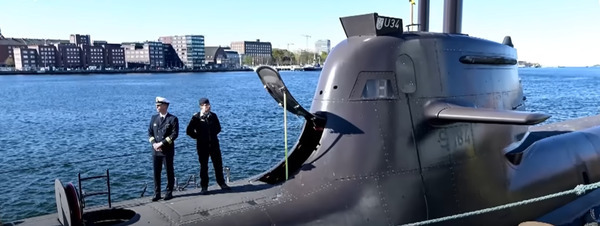
[Choice Times=Jin-an Kim, Former Executive Vice President, Samsung Electronics (Middle East Region)]Presidential Chief of Staff Kang Hoon-sik, who had optimistically described South Korea's chances in Canada's next-generation submarine procurement project—worth approximately 60 trillion won (US$43 billion)—as "about 50-50," was proven wrong after Hanwha Ocean lost the competition. Germany's ThyssenKrupp Marine Systems (TKMS) was selected as the preferred bidder. Unfortunately, the concerns raised earlier by Choice Times proved accurate. In its July 5 article, "A ₩60 Trillion National Interest at Stake... Was the Presidential Chief of Staff Too Reckless?", the paper questioned, "On what authority or expertise does the presidential chief of staff publicly assign precise winning probabilities to such a strategic defense project?" Even earlier, in its July 1 analysis, "Canada's ₩60 Trillion Submarine Project? The Harsh Reality Beyond Nationalistic Optimism," the paper argued that Canada—a G7 nation and a founding NATO member—would face enormous political and strategic hurdles in entrusting its most sensitive naval program to South Korea, a non-NATO Asian country. (Editor's note) The announcement that Germany's TKMS had won Canada's Canadian Patrol Submarine Project (CPSP), valued at roughly ₩60 trillion, confirmed that assessment. Despite an intense campaign by the South Korean government and defense industry against one of the world's dominant diesel-electric submarine builders, they ultimately failed to overcome what may be called "the NATO wall." For observers familiar with international security politics, the outcome was hardly surprising. The decisive clue appeared when Canadian Prime Minister Mark Carney announced that the winner would be revealed during a visit to Halifax, Canada's principal Atlantic naval base, immediately before attending the NATO Summit. Any serious geopolitical observer should have recognized the symbolism. Just before joining dozens of NATO leaders to demonstrate alliance unity, it was almost inconceivable that Carney would publicly award Canada's most strategically sensitive naval project to a non-NATO country instead of a key European ally. Believing that Canada would make such an announcement in favor of South Korea at that moment reflected a fundamental misunderstanding of diplomatic realities. Regrettably, very few South Korean media outlets examined this geopolitical context. Ironically, a single Facebook commenter who wrote, "If the Canadian prime minister announces the result just before the NATO summit, the winner has already been decided," demonstrated greater strategic insight than much of the country's mainstream media. Until the very day of the announcement, many news organizations continued publishing optimistic scenarios suggesting that Germany and South Korea might split the contract by building six submarines each—a prediction that, in hindsight, resembled wishful thinking more than serious analysis. The government displayed similar optimism. Although President Lee Jae-myung personally supported South Korea's bid, official messaging largely ignored the realities of international security alliances and instead emphasized domestic optimism. The fundamental reason for South Korea's failure was not technological weakness. Hanwha Ocean and HD Hyundai Heavy Industries have developed the KSS-III 3,000-ton submarine, widely recognized as one of the world's most advanced conventional submarines, backed by an exceptional record of meeting delivery schedules. The real problem was conceptual. South Korea approached the competition primarily as a commercial transaction based on technology and price competitiveness. Modern defense procurement—particularly for strategic assets such as submarines—is fundamentally about security alliances, not simply engineering excellence. Canada, as a founding NATO member and a pillar of North American security, naturally prioritizes interoperability and long-term strategic integration with its allies. Germany offered not merely submarines but a comprehensive security partnership grounded in NATO solidarity and European Union cooperation. South Korea, by contrast, relied heavily on confidence gained from recent export successes, including K9 self-propelled howitzers and K2 main battle tanks in countries such as Poland and Romania. Those victories may have created excessive confidence. In reality, Eastern European countries selected South Korean weapons primarily because the Ukraine war demanded immediate deliveries, and South Korea alone possessed sufficient manufacturing capacity to meet urgent timelines. Had Germany, France, or Britain maintained full production capabilities after the Cold War, South Korea's chances in those conventional weapons contracts would likely have been significantly lower. If delivery speed alone explained those earlier successes, expecting technology and cost efficiency to overcome entrenched alliance politics in the submarine sector was unrealistic. Submarines represent the highest level of strategic military cooperation. Without deep institutional defense partnerships, even world-class technology has inherent limits. South Korea must therefore ask whether it has built the level of military alliances expected by advanced defense markets. Despite ambitions to enter premium submarine markets, South Korea remains outside major security frameworks such as NATO, the Quad, and AUKUS, all of which shape defense cooperation across Europe and the Indo-Pacific. Germany entered the competition backed by decades of institutional trust with Canada. South Korea entered primarily with superior hardware. In strategic defense procurement, trust often outweighs technology. This setback should therefore serve as an important lesson rather than merely a disappointment. First, South Korea's defense export strategy must evolve beyond emphasizing affordability and technical superiority toward offering comprehensive security partnerships. Future success in advanced markets will require integrated military cooperation, regular joint exercises, intelligence sharing, and long-term strategic engagement alongside weapons sales. Second, South Korea should strengthen institutional cooperation with multilateral security frameworks such as the Quad, AUKUS, and NATO itself. Participation must extend beyond symbolic joint exercises toward genuine interoperability of strategic defense systems. Only through sustained diplomatic engagement can future bids in Europe and the English-speaking world become more competitive. Finally, both government officials and the media must adopt a far more disciplined understanding of geopolitical realities. Unfounded optimism and emotionally driven "national pride" reporting may inspire domestic audiences temporarily, but they also distort strategic judgment and encourage unrealistic expectations. Rather than casually describing billion-dollar defense competitions as "50-50" contests, policymakers should candidly acknowledge South Korea's diplomatic limitations while working systematically to overcome them. The failure in Canada is painful. Yet it may ultimately become one of the most valuable lessons for South Korea's defense industry. It demonstrates once again a timeless truth of international politics: Superior technology alone does not win strategic defense contracts. Strong alliances do. South Korea must now replace emotional optimism with sober realism. Only those who understand geopolitical reality as it truly exists will stand a better chance of winning the next international defense competition.
 최보식의언론
 0
0