
299 읽음
Did President Lee's Anger Over Industrial Accidents Miss the Mark? What the Statistics Reveal
 최보식의언론
 0
0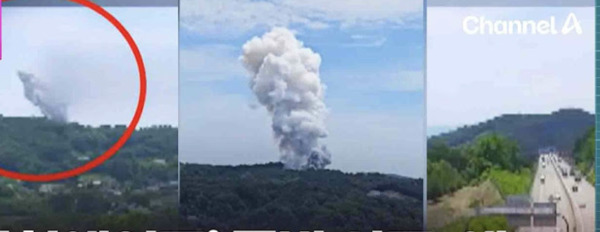
One of the issues President Lee Jae-myung devoted significant attention to after taking office was reducing deaths from industrial accidents. He was likely embarrassed by South Korea's workplace fatality statistics, which have long been significantly worse than those of many OECD countries.
The president repeatedly expressed anger while citing the Serious Accidents Punishment Act, even employing extreme rhetoric suggesting that construction projects and the construction industry itself would not be worth having if workplace deaths could not be prevented.
Yet the results appear to show that industrial accident fatalities are not easily influenced by presidential determination alone.
In 2024, the year before President Lee took office, there were 2,098 workplace deaths, with a fatality rate of 0.98. Remarkably, during the first year after his inauguration, the number of deaths actually increased to 2,248—an increase of 150 fatalities—and the fatality rate rose slightly to 0.99.
I have repeatedly argued that workplace fatalities would not decline simply because of presidential appeals. Just as traffic deaths have steadily fallen over time not only because of better regulations but also because of technological advances that make vehicles safer, industrial accident prevention requires more than political determination.
In fact, this administration's workplace safety policies may have become a form of reverse incentive by excessively compensating for workers' own failures to follow safety practices. The result has been to diminish the value of corporate investments in safety while dramatically increasing the costs of worker supervision and management.
I have witnessed numerous worksites where fall-prevention equipment was treated with astonishing negligence. Compensation for the death of a foreign worker reportedly jumped from the mid-300 million won range to well over 600 million won, creating what some argue is a structurally perverse incentive.
A significant portion of workplace accidents stems from the actions of workers themselves. Yet the Serious Accidents Punishment Act has dramatically increased only the liability borne by employers.
There is a strong possibility that the law itself may be creating incentives that unintentionally contribute to higher accident risks.
When responsibility for an accident lies with the worker, there must be mechanisms that hold the worker appropriately accountable.
Unless workers themselves remain fully alert and vigilant, there is no practical way to eliminate workplace accidents. The awareness that negligence can lead to tragic and meaningless death must itself function as a powerful deterrent.
Even today, at high-rise construction sites, many workers wear lightweight mesh safety vests simply because they are cooler in hot weather. Such vests can easily snag and tear. Workers properly attached to safety harnesses are still relatively rare because the equipment is uncomfortable and cumbersome.
Today, another tragedy struck, this time at a Hanwha Group factory, leaving multiple workers dead.
Will the president once again respond by pounding his desk in anger, or will he seek a different solution?
#WorkplaceSafety #IndustrialAccidents #SouthKoreaEconomy
* This article has been translated by ChatGPT.