
897 읽음
A Society Where We Can No Longer Call a Tank a Tank
 최보식의언론
 0
0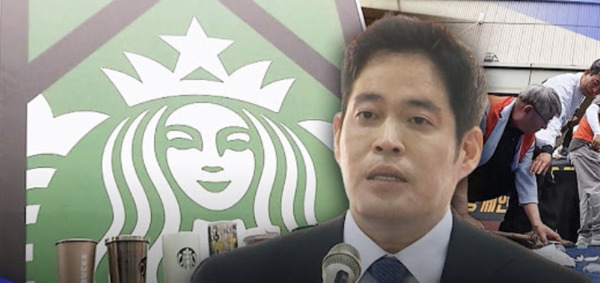
These days, society feels increasingly like a giant wartime space. Anger escalates instantly, silence itself becomes suspicious, and collective emotions are elevated into absolute moral truth in the name of justice. In particular, the political emotions surrounding May 18 appear to be moving beyond remembrance and into the realm of sanctification and quasi-religious devotion.
Yet strangely, inside Starbucks everything remained calm. Outside the fevered atmosphere manufactured by politics and media, ordinary life continued at its normal pace. Young people sat together reading books with earphones in their ears. Some worked quietly on laptops. Others stared silently out the window, lost in thought.
I watched that scene for a long time. Isn’t democracy fundamentally meant to protect precisely this kind of quiet everyday freedom? A society where citizens are not forced to display outrage, where political loyalty is not measured through emotional conformity, and where even the peaceful act of drinking coffee is not invaded by politics.
Many Koreans likely felt discomfort and even fear watching the recent “Tank Day” controversy involving Starbucks Korea and Chairman Chung Yong-jin of Shinsegae Group. Certainly, careless corporate marketing deserves criticism. The May 18 Democratic Uprising remains both a tragedy and a defining chapter in Korea’s democratic history. The pain of victims and bereaved families must be respected.
But the real problem was the collective reaction that followed. President Lee himself publicly expressed outrage. Cabinet ministers joined in. The ruling party mobilized politically. Hardline supporters, activist groups, and portions of the media amplified the pressure until what emerged resembled a form of public punishment. Eventually, the company’s CEO resigned. For many citizens, this no longer looked like criticism of a corporate mistake, but rather a dangerous form of political mob psychology approaching public shaming or ideological intimidation.
And in the minds of many Koreans, one unsettling question remained: “Have we become a society where even a tank can no longer be called a tank?” Of course, the historical wounds of May 18 deserve respect. But when particular words, symbols, or images themselves become political taboos — and when interpretive authority over them becomes monopolized by one political camp — society gradually ceases to resemble a free civic republic and begins to resemble a political faith community.
President Lee further intensified concerns by publicly criticizing Starbucks twice through social media. This was not merely an expression of regret. It functioned as a political signal. The language of a president is fundamentally different from the language of an ordinary politician. The moment a president publicly targets a corporation or incident, supporters, bureaucracies, ruling-party politicians, civic organizations, and online communities inevitably begin interpreting it as a form of behavioral guidance.
Even more troubling is the broader democratic implication. In liberal democracies, politicians may criticize corporations. But it is extremely unusual — and widely viewed as dangerous — when the president and central government ministries appear to collectively pressure a private company in public view.
Why? Because presidential criticism is never merely personal opinion. For corporations, such signals can translate into immense pressure involving regulation, taxation, licensing, labor issues, financial markets, investment confidence, and public sentiment. This is precisely why advanced democracies traditionally exercise great restraint when state power interacts publicly with private enterprise.
It is telling that even Lee Seok-yeon, widely respected across ideological lines as a senior attorney-at-law and chair of the National Integration Committee, recently delivered what amounted to a public warning to President Lee regarding excessive polarization and social division. His core concern was simple but profound: power should cool overheated social emotions, not inflame them further.
I spent a year studying at University of Warwick in the 1980s, where I developed a deep interest in the Northern Ireland issue, one of the four constituent regions of the United Kingdom of Great Britain and Northern Ireland. Later, as I came to learn more about Bloody Sunday, I began to see more clearly how the memory of state violence can become intertwined with political identity.
In 1972, in the city of Derry, British paratroopers opened fire on unarmed Catholic civil-rights demonstrators during a protest. Fourteen civilians were killed. Structurally, the parallels with May 18 are difficult to ignore: a state treating civilian resistance as a threat to regime stability and responding with lethal force.
But the deeper issue emerged afterward. Bloody Sunday evolved beyond tragedy into a central political symbol for Irish nationalist identity. Political groups such as Sinn Féin repeatedly utilized it as a symbol of British state violence and political legitimacy. Commemorations increasingly became spaces for political mobilization and identity politics. Memory itself gradually transformed into a test of political loyalty.
At first, this process carried positive functions as well. It helped restore the dignity of victims and highlighted human-rights abuses. Eventually, after years of investigation, former British Prime Minister David Cameron formally apologized in 2010.
Yet over time, the issue became far more complicated. Bloody Sunday hardened into a sacred political symbol. Certain interpretations became socially permissible while others became taboo. Remembrance merged with ideological loyalty. Dissenting perspectives were often stigmatized as attacks on victims themselves.
As a result, Northern Irish society remained trapped for decades in cycles of memory politics and identity conflict. Distrust between Catholic and Protestant communities deepened across generations, delaying reconciliation and social integration.
Even recently, controversies surrounding the use of Bloody Sunday imagery and symbolism continue to trigger intense political backlash in Britain. The fact that historical memory still functions as a powerful emotional political asset demonstrates how difficult it becomes for societies to escape politicized trauma once collective memory is institutionalized into partisan identity.
And this is precisely the question Korea must now ask itself calmly and honestly: Where is May 18 heading? The uprising itself was unquestionably a history of civic resistance against authoritarian military rule and state violence. It deserves respect. The real issue is how political forces choose to use it.
If May 18 gradually becomes an exclusive moral asset monopolized by a specific political faction — if certain words, interpretations, or expressions become taboo — and if loyalty toward its officially sanctioned interpretation becomes a test of political legitimacy, then Korea too risks falling into the vicious cycle of Northern Ireland-style memory politics.
The Starbucks controversy may represent an early warning sign. At first, it begins as criticism of a marketing mistake. Then corporations begin self-censoring. Media outlets become cautious. Academia and the cultural sphere become reluctant to discuss certain historical symbols freely. Political actors increasingly rely on emotional mobilization and moral outrage. Eventually, the essential question ceases to be truth itself and becomes instead: “Have you demonstrated sufficient loyalty?”
At that stage, democracy no longer functions as a system of free discussion. It transforms into a structure dominated by political sanctification and emotional mobilization. Political religion is defined above all by the impossibility of debate. In politicized sacred spaces, loyalty matters more than factual complexity. Minor mistakes become “blasphemy.” Criticism becomes forbidden. Doubt itself becomes betrayal.
Freedom of expression remains the foundational pillar of democracy. The Constitution of the Republic of Korea explicitly guarantees freedom of speech, publication, and expression. These freedoms are not merely legal privileges; they are the final defensive wall protecting a free society. The danger begins when state power and collective pressure create informal taboos around certain words, symbols, or interpretations. Citizens then begin fearing social punishment and public stigmatization long before any legal sanction appears.
That is the moment self-censorship begins. Free discussion contracts. Constitutional freedoms remain formally intact while their spirit quietly erodes underneath. Violations of constitutional liberty do not arise only through explicit laws or police coercion. They can also emerge when political power and collective pressure combine to create an atmosphere in which citizens no longer feel safe speaking plainly and honestly. If society reaches a point where even the word “tank” becomes difficult to use freely, then the constitutional spirit of freedom itself has already begun to weaken.
Is this truly the face of a healthy democracy? Democracy is fundamentally a system of tolerance — one that permits mistakes, disagreement, and multiple interpretations. But when historical tragedy becomes political sanctity and a permanent moral license for one political faction, society gradually descends into emotional mobilization and collective self-censorship.
History does not repeat itself exactly. But human psychology repeats itself with astonishing consistency. And one of the first signs of democratic decay is the moment people become afraid to call reality by its proper name.
A society where we can no longer call a tank a tank is not a healthy democracy.
#StarbucksControversy #PoliticalReligion #FreedomOfExpression