
139 읽음
이란전쟁으로 바다 위에 고립된 아시아 선원 2만명! ...英이코노미스트
 최보식의언론
 0
0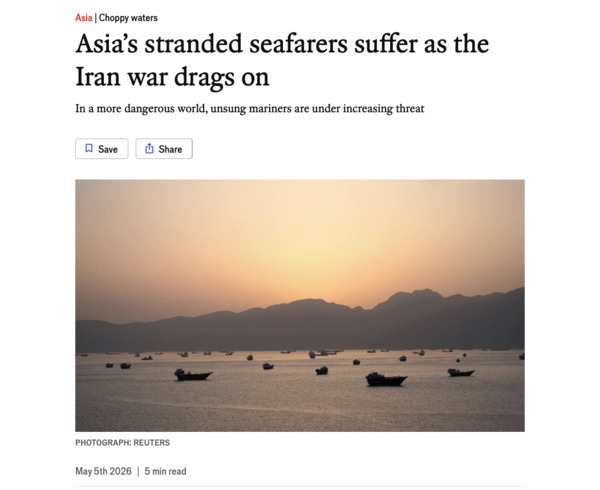
영국 시사주간지 이코노미스트가 5일 ‘Asia's stranded seafarers suffer as the Iran war drags on’(이란 전쟁 장기화 속, 발이 묶인 아시아 선원들의 고통)라는 제목의 기사에서 아시아 상선 노동자들의 열악한 환경을 조명했다.
이코노미스트는 이 기사에서 “이란전쟁의 장기화로 약 2만 명의 선원들이 호르무즈 해협과 걸프 지역에 발이 묶인 채 위험 속에 고립돼 있다”며 “이들은 대부분 필리핀·인도·인도네시아 등 아시아 출신으로 세계 물류를 떠받치는 상선 노동자들”이라고 전했다.
이어 “미사일 공격과 선박 폭발, 나포 사건까지 이어지며 실제 사망자도 발생했다”며 “국제운수노동자연맹(ITF)은 위험 지역 항해 거부권과 송환 권리를 보장했지만 대체인력 부족과 비자·항공편 문제로 귀국은 쉽지 않다”고 말했다.
그러면서 “선원들은 팬데믹 장기 승선, 해적 위협, 임금 체불 등 누적된 고통 속에서 살아왔다”며 “각국 정부는 선원 송환에 나서고 있지만, 글로벌 해운업은 이미 숙련된 선원 부족 문제를 겪고 있다”고 말했다.
이코노미스트는 또 “일부 선원들은 전쟁수당을 받지만 상당수는 협약 보호조차 받지 못하고 있다”며 “식수와 식량 부족도 심각하며, 계약 노동 구조 때문에 배를 떠나는 것 자체가 생계 위협이 된다”고 덧붙였다.
아래는 이코노미스트의 해당 기사 전문이다.
더 위험해진 세계에서 이름 없는 바다 노동자들이 점점 더 큰 위협에 노출되고 있다
“우리는 전쟁 포로와 같습니다.”
페르시아만에서 미사일이 “사방으로 날아다니는” 가운데 대기 중인 칸 선장은 이렇게 말한다. 한 번은 근처 연료 유조선이 피격돼 화재와 폭발이 발생했고, 또 다른 때에는 파편이 그의 배 바로 몇 미터 앞의 선박을 침몰시켰다. 칸 선장의 승무원들은 호르무즈 해협을 세 차례 통과하려 했지만, 매번 이란 측에 의해 되돌려졌다. 그는 자신의 실명과 선박 정보를 밝히길 거부하며 “우리는 두렵다”며 “집으로 돌아가고 싶다”고 말했다.
그러나 실제로 귀국한 사람은 거의 없다. 도널드 트럼프 미국 대통령은 일요일 호르무즈 해협에 발이 묶인 선박들을 “안내”해 탈출시키는 계획을 발표했지만, 미 해군 호위를 제공하지 않을 예정이어서 실제 효과는 제한적일 가능성이 크다. 현재 약 2만 명의 선원들이 걸프 지역에 갇혀 있다. 이들 대부분은 필리핀·인도네시아·인도 같은 아시아의 비교적 가난한 국가 출신이다. 이들 국가는 원유·스마트폰·비료·식량 등 전 세계 무역 물동량의 85%를 운반하는 상선 선원 공급의 핵심 국가들이다. 그러나 이 선원들은 자신들과 무관하고 대비조차 되어 있지 않은 전쟁에 점점 더 휘말리고 있다.
호르무즈 해협 봉쇄만이 선원들이 걸프 지역에 발이 묶인 이유는 아니다. 국제운수노동자연맹(ITF)은 회원 선원들에게 해당 지역 항해를 거부하고 본국 송환을 요구할 권리를 확보해 주었다. 하지만 선원들은 회사가 대체 인력을 찾기 전까지 법적으로 배를 떠날 수 없다. 문제는 위험 지역에 자원하려는 대체 인력이 거의 없다는 점이다. 중동발 항공권은 비싸고 구하기 어렵고, 걸프 국가 입국 비자 발급도 쉽지 않다. 해협이 다시 열린다 해도 “상황이 어느 정도 정상으로 돌아가기까지 최소 6개월은 걸릴 것”이라고 해운업계를 대표하는 IMEC의 프란체스코 가르줄로는 말한다.
일부 선원들은 여전히 직접적인 공격 위험 속에 놓여 있다. 지난 4월 말 이란이 나포한 두 척의 선박에는 필리핀 선원 15명이 타고 있었다. 이들은 무사했지만, 이번 전쟁 동안 인도인과 태국인 등을 포함해 최소 10명의 선원들이 목숨을 잃었다. ‘아르준’(가명)의 승무원들은 점심을 준비하던 중 포탄 공격을 받았고, 한 명이 사망했다. 그는 “평소 배는 살아 움직이는 공간이지만, 폭발 이후에는 아무 소리도, 리듬도 없었다. 유령선 같았다”고 회상했다. 아르준과 승무원들은 양동이로 바닷물을 퍼 날라 거대한 “불덩이” 위에 뿌리며 진화 작업을 벌인 끝에 구조됐다.
걸프 지역에 남아 있는 선원들의 상황은 제각각이다. 일부 선주들은 전쟁 지역 근무 시 두 배 임금 지급과 본국 송환 권리를 보장하는 단체협약에 가입했다. 어떤 선원들은 평소보다 적은 일을 하면서 큰 위험수당을 받는 데 만족하기도 한다. 그러나 ITF에 따르면 전체 상선의 절반도 이 협약 적용을 받지 못한다.
협약 적용 선박에서도 생활은 갈수록 힘들어지고 있다. 칸 선장은 “식수 위기”를 겪고 있다며, 물 1톤 가격이 전쟁 전 약 2달러에서 지금은 50달러까지 치솟았다고 말했다. 그의 승무원들은 물을 배급제로 사용 중이다. 트럼프 대통령이 언급했듯 일부 선원들은 식량 부족에도 시달리고 있다. 하지만 걸프 지역을 떠나는 것 자체도 위험 부담이다. 대부분의 선원들이 계약 단위로 일하기 때문이다.
선원들은 이번 전쟁을 최근 이어진 수많은 고난의 연장선으로 본다. 이 직업은 원래부터 힘들고 위험했으며, 아프리카의 뿔과 기니만 인근 해적 공격 같은 위협도 여전하다. 그러나 코로나19 팬데믹 기간 상황은 특히 악화됐다. 각국 정부는 선원들의 상륙을 금지하고 승무원 교대를 막았다. 아르준은 아내를 보지 못한 채 20개월을 바다에서 보냈다. 또 일부 선원들은 임금도 지급하지 않은 채 선박에 버려지는 사례가 늘어난 데 대해 분노하고 있다.
일부는 이번 위기가 변화를 촉발하길 기대한다. 방글라데시 노조 지도자인 아남 차우두리 선장은 미래의 전쟁을 계획하는 지도자들에게 간단한 요청을 남겼다. “선원들이 제발 도망칠 시간을 주세요. 당신들의 말도 안 되는 행동 때문에 희생양이 되지 않게 해달라는 겁니다.”
선원들이 위협받는 곳은 걸프 지역만이 아니다. 최근 몇 년간 후티 반군의 미사일과 드론 공격으로 홍해에서 여러 선원들이 사망했다. 러시아의 공격 역시 흑해에서 선원들의 목숨을 앗아갔다.
아시아 각국 정부는 선원들에게 동정적이다. 선원들은 정치·경제적으로 상당한 영향력을 가진 집단이기 때문이다. 세계 최대 선원 공급국인 필리핀의 선원 59만 명은 연간 70억 달러 이상의 송금을 본국으로 보내며, 이는 필리핀 전체 해외 송금의 5분의 1에 달한다. 필리핀에는 과거 ‘앵커’를 뜻하는 ‘앙클라(Angkla)’라는 선원 정당까지 존재했다. 필리핀 정부가 자국 선원들에게 걸프 지역 배치를 거부할 권리가 있다고 강조하는 것도 놀라운 일이 아니다. 그러나 이는 동시에 현지에 발이 묶인 선원 교체를 더욱 어렵게 만들 수도 있다. 인도 정부 역시 선원 송환 작업을 진행하면서 그 노력을 적극적으로 홍보하고 있다.
모든 국가는 선원들의 삶을 개선하는 데 이해관계를 갖고 있다. 전쟁 이전부터 이미 숙련 선원은 수요에 비해 부족했다. 이 직업은 아르준 같은 이들에게 빈곤 탈출의 통로였다. 육지보다 훨씬 높은 임금을 받을 수 있고 “세계를 돌아다닐 기회”도 제공하기 때문이다. 하지만 동시에 점점 더 위험해지는 세상 속에서 “광활한 바다 위 작은 배 안에서 외롭게 살아야 하는 삶”이기도 하다.
「기사 원문」
In a more dangerous world, unsung mariners are under increasing threat
“We are like war prisoners," says Captain Khan, who is waiting in the Persian Gulf as missiles "go all around" him. One hit a nearby fuel tanker, which caught fire and exploded. On another occasion debris sank a vessel a few metres in front of him. Mr Khan's crew have tried to pass through the Strait of Hormuz three times; the Iranians have turned them back on each occasion. "We are afraid," says the captain, who does not want to disclose his full name or identify his vessel. "We have to go home."
Very few have. On Sunday Donald Trump announced a plan to "guide" stranded vessels out of Hormuz, but it will probably have only a small effect on shipping, in part because America does not plan to provide naval escorts. Around 20,000 seafarers remain stuck in the Gulf. Most hail from relatively poor countries in Asia, such as the Philippines, Indonesia and India. These countries supply a large share of the crew for the merchant fleet that carries 85% of the world's traded goods (by volume), from oil to smartphones, fertiliser and food. Yet these sailors are increasingly caught up in conflicts in which they play no part and for which they are unprepared.
The closure of Hormuz is only one reason why so many seafarers are stuck in the Gulf. The International Transport Workers' Federation (itf) has secured for its members a right to refuse to sail into the region and to be repatriated from it. But seamen cannot legally abandon their ships until companies find replacements. Few are volunteering to relieve them. Tickets on flights out of the Middle East are also expensive and scarce, while visas to enter Gulf countries are hard to get. That means that even if the strait opens it will take "at least six months before things get back to some sort of normality" for seafarers in the region, says Francesco Gargiulo of imec, which represents shipping firms.
Some remain directly in the firing line. Fifteen Filipinos were aboard two ships seized by Iran in late April. They were unharmed, but at least ten other seafarers, including Indians and Thais, have been killed during the war. Arjun's (not his real name) crew were preparing lunch when a projectile hit, killing one of them. Normally the "ship is alive", but after the explosion there was "no sound, no rhythm. It felt like a ghost ship." Arjun and the crew grabbed buckets, scooped out seawater and threw it on a huge "fireball" before they were rescued.
For those still in the Gulf conditions vary. Some shipowners have signed up to a collective-bargaining agreement that guarantees seafarers double pay in war zones, in addition to the right to repatriation. Some mariners are happy to be picking up a fat bonus while doing less work than they normally might. But less than half of all commercial ships are covered by this deal, according to the itf.
Even on ships whose owners have signed the agreement, life is getting harder. Captain Khan "has a fresh-water crisis"; one tonne of the stuff now costs him $50, up from around $2 before. His crew are rationing it. As Mr Trump has noted, other seafarers are running out of food. But choosing to leave the Gulf is itself a risk, because most seafarers work from contract to contract.
Seafarers see the war as only the latest of many recent hardships. Their profession has always been difficult and dangerous; occupational hazards still include attacks by pirates near the Horn of Africa and in the Gulf of Guinea. But things got particularly tough during the pandemic, when governments prevented mariners from setting foot on shore and blocked crews from relieving them. Arjun went 20 months without seeing his wife. Others are aggrieved that a growing number of employers abandon seafarers on ships without paying their wages.
Some hope that this crisis will be the one that prompts change. Captain Anam Chaudury, who heads a union in Bangladesh, has a simple request for leaders planning future wars: "Please give seafarers time to get the hell out. Let them not be victimised by your nonsense activities." The Gulf is not the only place where seafarers are under threat. In recent years Houthi missiles and drones have killed several sailors in the Red Sea. Russian strikes have also killed mariners in the Black Sea.
Governments in Asia are sympathetic to mariners, who are a potent political and economic force. The 590,000 seafarers from the Philippines, the largest contingent of any country, remit more than $7bn a year, a fifth of the country's total remittances. They have even previously had their own political party, called Angkla ("anchor"). It is unsurprising, then, that the Philippine government has stressed that its seafarers can refuse deployments to the Gulf-which may in turn make it harder to relieve those still stranded there. India's leaders are working to repatriate seafarers from the region and making sure that the public knows about their efforts.
All countries have a stake in improving mariners' lives. Even before the war there were too few qualified seafarers to meet demand. The job has long provided men like Arjun a route out of poverty, offering far higher wages than they can get on land and a chance to "roam around the world". Yet it also means years spent "on a very lonely sea, in a small ship in a vast ocean" that looks increasingly dangerous.
#호르무즈해협 #이란전쟁 #상선선원위기