
376 읽음
“엄마를 살려주세요” ... 탈북 청년은 왜 조현 장관에게 이런 편지 썼을까
 최보식의언론
 0
0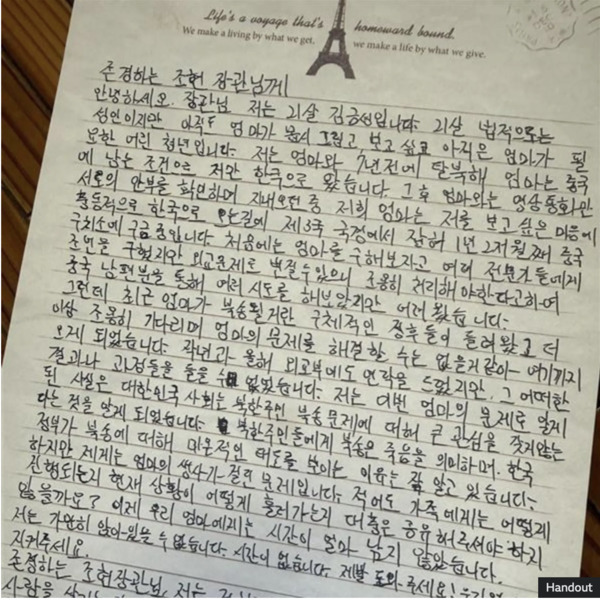
“장관님 저는 21살 법적으로는 성인이지만 아직도 엄마가 몹시 그립고, 보고 싶고, 아직은 엄마가 필요한 어린 청년입니다. 저는 엄마와 7년 전에 탈북해 엄마는 중국에 남는 조건으로 저만 한국에 왔습니다.”
2019년 탈북 당시 금성 씨의 어머니 은희 씨는 아들을 제3국인 태국을 통해 대한민국에 도착할 수 있도록, 본인은 중국인 남자에게 신부로 팔린 상태였다. 이렇게 금성 씨는 서울로, 은희 씨는 자신이 팔려간 중국 동북부에 정착해 살게 되었다. 그러나 은희 씨는 아들을 만나기 위해 지난해 1월 중국을 벗어나기 위한 모험을 감행했고, 중국 남부 미얀마 접경 지역에서 붙잡혔다. 이후 그녀는 다른 탈북민들과 함께 중국 동북부의 한 교소도로 이송돼 수감됐다.
이러한 사실은 영국 BBC가 28일 자로 보도한 ‘I escaped North Korea with my mum. Now I'm terrified she might be sent back’(엄마와 함께 북한을 탈출했지만…이제는 엄마가 북송될까 두렵다)라는 제목의 기사를 통해 알려졌다.
금성 씨는 이 편지에서 “저희 엄마는 저를 보고 싶은 마음에 충동적으로 한국으로 오는 길에 제3국 국경에서 잡혀 1년 2개월째 중국 구치소에 구금 중”이라며 “그런데 최근 엄마가 북송될 거란 구체적인 징후들이 들려왔고 더 이상 조용히 기다리며 엄마의 문제를 해결할 수는 없을 거 같아 여기까지 오게 됐다”고 밝혔다.
이어 “작년과 올해 외교부에도 연락을 드렸지만 그 어떠한 결과나 과정들을 들을 수는 없었다”며 “저는 이번 엄마의 문제로 알게 된 사실은 대한민국 사회는 북한 주민 북송문제에 대해 큰 관심을 갖지 않는다는 것”이라고 지적했다.
그러면서 “북한 주민들에게 북송은 죽음을 의미하며 한국 정부가 북송에 대해 미온적인 태도를 보이는 이유를 잘 알고 있다”며 “하지만 ㅐ제계는 엄마의 생사가 걸린 문제다. 적어도 가족에게는 어떻게 진행되는지 현재 상황이 어떻게 흘러가는지 대충은 공유해주셔야 하지 않을까요?”라고 반문했다.
그는 “이제 우리 엄마에게는 시간이 얼마 남지 않았다”며 “저는 가만히 앉아있을 수 없다. 시간이 없다. 제발 도와주세요. 우리 엄마를 지켜주세요”라고 호소했다.
다음은 금성 씨 모자의 안타까운 사연을 보도한 BBC의 기사 ‘I escaped North Korea with my mum. Now I'm terrified she might be sent back’ 전문이다. (편집자)
2020년 크리스마스이브, 금성(가명)의 휴대전화가 울렸을 때 그는 긴장한 채 전화를 받았다.
그는 그 전해, 국제적인 비밀 탈출 네트워크와 은신처, 브로커들의 도움을 받아 북한에서 남한으로 탈출하는 위험한 여정을 감행한 바 있었다.
잠시 후 스피커 너머로 어머니의 목소리가 들려왔다. “금성아, 금성아, 나 보이니?”
어머니 은희(가명)는 흐느낌 때문에 말을 제대로 잇지 못했고, 십대 아들 금성은 손으로 입을 틀어막은 채 울음을 삼켰다.
“엄마, 나 잘 지내고 있고 아프지도 않아.” 금성은 다급히 어머니를 안심시켰다. 어머니 얼굴을 다시 본 안도감은 이루 말할 수 없었다.
“시간이 너무 많이 흘렀구나.” 어머니는 말했다. “네가 너무 달라져서 거의 못 알아보겠어.”
금성은 이제 자신이 어머니보다 더 키가 컸다고 자랑스럽게 말했다. 그는 웃기려는 듯 머리를 들어 올려 여드름 난 얼굴을 보여주었다.
그러고는 휴대전화를 들고 서울의 새 집 안을 보여주며 구경시켜 주었다.
“집이 3층짜리야, 정말 커!” 금성이 외쳤다. “피아노도 있어.”
“와!” 어머니가 답했다.
금성은 15세가 될 때까지 중국 국경 인근 북한의 한 마을에서 어머니와 함께 살았다. 그는 당시 삶의 구체적인 내용을 말하는 데 조심스러워하며, 단지 그것이 극도로 힘든 삶이었다고만 말한다.
“엄마가 힘든 일을 하면 제가 도왔어요. 엄마가 너무 지치고 힘들어할 때는 같이 울기도 했고요. 우리는 그렇게 살았어요.”
모자는 그 삶을 벗어나기 위해 모든 것을 걸었다.
금성이 마지막으로 어머니를 본 것은 2019년 6월, 북한과 중국을 가르는 압록강 강변에서였다.
그곳은 삼엄하게 요새화된 국경이다. 양쪽 모두 높은 철책이 설치돼 있고, 종종 전기가 흐르며, 수백 미터 간격으로 초소가 서 있다.
두 사람이 함께 무사히 강을 건너 중국 땅에 들어선 뒤에야, 어머니는 자신이 감수한 희생을 털어놓았다.
은희는 중국 남성에게 신부로 팔릴 예정이었다. 이는 1990년대 이후 북한을 탈출하려는 수만 명의 북한 여성들이 겪어온 현실과 다르지 않았다.
그 대가로, 결혼을 주선한 브로커는 금성이 중국 전역 4,000km를 거쳐 태국까지 이동할 수 있도록 도와주기로 했다. 수많은 검문소와 감시, 보안망을 뚫고 가야 하는 길이었다.
수십 년 동안 약 3만 명의 북한 주민들이 더 나은 삶을 찾아 위험을 무릅쓰고 국경을 넘어 중국을 거쳐 한국에 도착했다.
인권단체들에 따르면, 이들이 붙잡혀 북송될 경우 고문, 정치범수용소 강제노동, 성폭행, 심지어 일부는 처형까지 당할 수 있다. 북한 정권은 탈북자를 국가의 적으로 간주한다.
금성은 어머니와 헤어져야 한다는 사실을 알고 큰 충격을 받았다. 그러나 북·중 국경 순찰대에게 발각되기 전에 둘은 서둘러 헤어질 수밖에 없었다.
금성은 거의 두 달에 걸친 험난한 여정 끝에 태국을 거쳐 마침내 서울에 도착했다.
어머니와 아들이 헤어진 지 벌써 6년이 흘렀다. 그리고 이제는 은희가 아들의 도움이 필요한 상황이 됐다.
그녀는 서울로 가기 위해 중국을 떠나려다 붙잡혀 중국의 한 교도소에 수감돼 있다. 금성은 어머니가 북한으로 강제 송환될까 두려워한다. 그는 어머니가 북송되면 감옥에서 죽을 수도 있다고 믿고 있다.
유엔 인권 전문가들은 2023년 10월 북송된 여성 두 명이 처형됐다는 보고를 인용한 바 있다. 인권단체들에 따르면 그 이후로 최대 1,000명이 중국에서 북한으로 강제 송환됐을 수 있다.
금성은 중국 정부에 호소하는 등 어머니를 구하기 위해 가능한 모든 방법을 동원하고 있다.
“저는 그저 엄마에게 평범한 삶을 한 번 더 살 기회를 달라고 부탁하고 싶을 뿐이에요.”
이에 대해 BBC의 질의에 중국 외교부는 중국이 “법치 국가”라고 답했다.
이어 성명은 다음과 같이 덧붙였다.
“불법 입국자는 난민이 아니다. 중국은 언제나 책임 있는 태도를 유지해 왔으며, 국내법과 국제법을 준수하고, 인도주의 정신에 따라 관련 사안을 적절히 처리하고 있다.”
2020년 12월 통화 당시, 은희는 아들에게 이렇게 말했다.
“네가 살아 있는지 죽었는지조차 알 방법이 없었어.”
그녀는 태국을 통과하는 길이 얼마나 험난한지 알고 있었다.
“계속 걱정했어. 혹시 너한테 무슨 일이 생기면 어쩌나 하고.”
금성의 탈출 여정 역시 극도로 어렵고 위험했다. 한때 그는 결핵으로 추정되는 증세로 쓰러지기도 했다.
“너무 어지러워서 서 있을 수도 없었어요. 태국 국경을 넘었을 때는 사람들이 저를 등에 업고 이동시켜줬어요.”
서울 정부는 대한민국 헌법에 따라 북한 주민을 대한민국 국민으로 보고, 정착을 지원한다.
금성은 서울의 탈북민 정착지원센터 하나원에서 3개월을 보낸 뒤, 당시 15세의 나이로 위탁가정에 배치되어 학교에 다니기 시작했다.
“내가 너를 얼마나 생각했는지 아니?” 어머니가 말했다. “이제야 마음이 놓인다.”
2019년 아들과 헤어진 뒤, 은희는 자신이 팔려간 중국 동북부의 남성과 함께 정착했다. 그는 다행히도 친절한 배우자였지만, 은희는 아들을 깊이 그리워했고, 언젠가 꼭 다시 만나길 바랐다.
그녀는 금성을 찾기 위해 여러 시도를 했다. 그중 하나는 북한 탈북민들 사이에서 인기가 있던 중국 팟캐스트에 출연해, 남한으로 간 아들에 대해 이야기한 것이었다.
서울에 있던 금성의 친구 한 명이 우연히 그 방송을 듣고 있었고, 설명을 듣자마자 그것이 금성이라는 걸 알아챘다.
몇 차례 전화가 오간 뒤, 금성은 마침내 어머니의 위챗(WeChat) 번호를 손에 넣었다.
이후 둘은 정기적으로 연락하기 시작했다. 은희는 아들이 밥은 잘 먹는지, 잠은 잘 자는지 걱정했고, 머리가 너무 길어졌다며 장난스럽게 놀리기도 했다.
그러다 2024년 12월, 은희는 큰 결심을 했다. 5년간의 이별 끝에, 그녀는 중국을 떠나 아들이 있는 서울로 가기로 한 것이다.
금성은 어머니가 붙잡힐 경우 어떤 일이 벌어질지 너무 잘 알았기에, 어머니에게 조심하라고 거듭 당부하며 계획을 만류하려 했다.
그 후 한 달 반 동안 아무 연락도 없었다.
그리고 마침내, 그가 가장 두려워하던 소식이 전해졌다.
2025년 1월 2일, 은희는 중국 남부 미얀마 접경 지역에서 붙잡혔다. 이후 그녀는 다른 탈북민들과 함께 중국 동북부의 한 교도소로 이송됐다.
요즘은 예전보다 훨씬 적은 수의 탈북민만이 한국에 도착한다.
코로나19 팬데믹 이후, 북한과 중국은 총연장 1,420km에 달하는 공동 국경에 이중 철책과 강화된 감시 체계를 설치했다.
2025년 한국에 입국한 탈북민은 223명이었다. 반면 2020년 이전에는 매년 약 1,000명이 한국으로 들어왔다.
과거에는 그 수가 훨씬 많았다. 1990년대 중반 대기근 이후, 보다 허술했던 중국 국경을 통해 “조용한 탈출 행렬”이 이어졌다고 인권단체들은 말한다.
은희처럼, 오늘날 중국에 도착하는 많은 북한 여성들은 암시장 신부로 팔려간다.
일부는 가족에게 돈을 보내거나 언젠가 탈출할 계획을 세우기 위해 스스로 결혼을 선택하기도 한다. 하지만 일부는 일자리를 주겠다는 거짓 약속에 속아 국경을 넘었다가, 중국에 도착한 뒤 강제로 결혼하게 된다.
결혼 후에도 많은 북한 여성들은 극심한 고립 속에 살며, 언젠가 북송될지 모른다는 두려움 속에서 지낸다고 말한다.
북한 여성 암시장 신부 수요는 중국의 심각한 성비 불균형과도 연결돼 있다. 중국은 여성보다 남성이 약 3,400만 명 더 많은것으로 추정된다. 이는 과거의 한 자녀 정책, 남아 선호에 따른 성 선택적 낙태, 일부 지역의 여아 살해 등에서 비롯된 결과다.
지난 2년 동안 BBC는 중국에 거주하는 북한 여성 4명과 중개인을 통해 메시지를 주고받았다. 이들의 진술을 독립적으로 검증할 수는 없지만, 지난 20년간 인권단체들이 수집한 수백 건의 증언과 유사하다.
그 여성들은 국경 인근 농촌 지역에서, 법적 신분도 서류도 없이, 전적으로 남편의 처분에 의존한 채 살아간다고 말했다.
한 여성은 BBC에 자신이 16세 때, 자신보다 거의 두 배 나이 많은 중국 남성에게 팔려갔다고 털어놓았다. 그는 그녀를 집 옆 헛간에 가둬두고 성폭행한 뒤, 나중에야 가족들에게 자신의 약혼녀라고 소개했다고 한다. 그녀는 현재 중국에서 15년째 살고 있으며 두 아이를 두고 있다.
중국 당국은 이 여성들이 어디 사는지 대부분 알고 있고, 정기적으로 이들을 점검한다고 한다.
때때로 경찰은 남편들에게 아내를 잘 통제하라고, 다른 성(省)이나 해외로 도망치지 못하게 하라고 경고한다. 여성들은 당국이 타액 샘플, 지문, 안면 인식용 사진까지 수집한다고 말했다.
중국 정부는 북한 주민들의 대규모 유입을 원치 않지만, 이 여성들이 큰 문제만 일으키지 않는다면 그들의 삶을 감시하며 방치하는 방식을 택하고 있는 것으로 보인다.
BBC와 연락한 네 여성 모두, 중국에서 나름의 삶을 꾸리기 위해 최선을 다하고 있다고 말했다.
“거의 행복해요.” 그중 한 명이 그렇게 적었다.
휴먼라이츠워치의 리나 윤은, 중국에 도착한 이 여성들이 “잔혹한 역설”속에 놓여 있다고 말한다.
“그들은 결코 합법적인 존재도, 결코 안전한 존재도 아닙니다. 묵인과 통제 사이 어딘가에 갇혀 있는 셈이죠.”
그녀는 이어 이렇게 말했다.
“자신의 자유를 포기해서라도 아들을 안전한 곳으로 보내려 했던 금성의 어머니가 지금 구금돼 있다는 사실은, 이 시스템에서 벗어나려는 사람들에게 어떤 일이 벌어지는지를 그대로 보여줍니다.”
그러나 금성은, 설령 다시 선택할 수 있다 해도 어머니가 북송되는 것보다는 중국에 남는 삶을 택하길 바란다고 말했다.
“저는 그저 엄마가 예전처럼 남편 곁에서 중국에 남아 평범하게 살 수 있기를 바랄 뿐이에요.”
“저는 단지 중국이 엄마를 북한으로 돌려보내지 않기를 간절히 빌고 있습니다.”
(3월 28일 정정: 이 기사의 초기 버전에는 중국과 태국이 국경을 맞대고 있다는 잘못된 표현이 있었으며, 이후 수정됐다.)
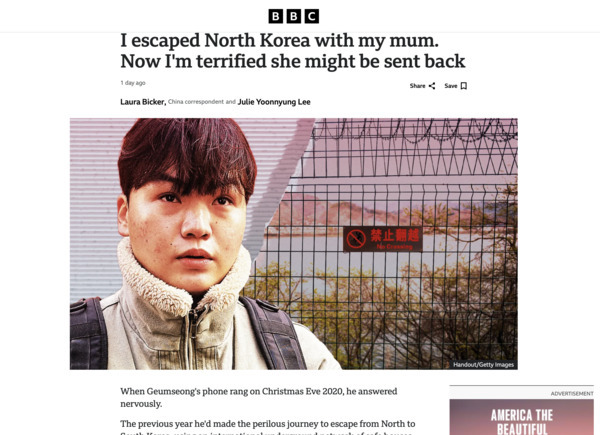
When Geumseong's phone rang on Christmas Eve 2020, he answered nervously.
The previous year he'd made the perilous journey to escape from North to South Korea, using an international underground network of safe houses and brokers.
Eventually his mother's voice came from the speaker: "Geumseong, Geumseong, can you see me?"
Eunhee could hardly get her words out through sobs as her teenage son clasped his hand to his mouth.
"Mum, I'm doing well and I'm not sick," Geumseong quickly reassured her. The relief at seeing his mother's face was overwhelming.
"So much time has passed," she replied. "I can hardly recognise you.“
Geumseong proudly announced he was now taller than his mother. He lifted his hair, showing his teenage acne to make her laugh.
Then he picked up the phone and took her on a tour around his new home in the South Korean capital, Seoul.
"The house has three floors, it's really big!" exclaimed Geumseong. "It even has a piano."
"Wow!" his mum responded.
Until he was 15, Geumseong lived with his mother in a North Korean village near the Chinese border. He is guarded about the details of their lives and will only say it was extremely tough.
"When she did difficult work, I helped her. Sometimes when she was overwhelmed and exhausted, we cried together," he said. "That is how we lived."
It was a life the pair risked everything to escape.
The last time Geumseong saw his mother was in June 2019, on the banks of the Yalu River which separates China from North Korea.
It's a heavily fortified border. There are high fences on both sides that are often electrified, with guard posts every few hundred metres.
It was only once they had made it safely across the river together in neighbouring China that his mother revealed the sacrifice she had made.
Eunhee would be sold as a bride to a Chinese man, like tens of thousands of North Korean women desperate to escape their country have been since the 1990s.
In return, the broker who arranged the match would help Geumseong travel 4,000km (2,500 miles) through China to Thailand, through endless checkpoints, surveillance and security.
Over the decades, around 30,000 North Koreans have made the risky journey across the border and through China to South Korea in search of a better life.
If they are caught they face torture, forced labour in prison camps, sexual assault, and in some cases execution on their return, according to rights groups. For the North Korean regime, those who escape are considered enemies of the state.
Geumsong was horrified to discover he would be separated from his mother. But they had to part quickly before they were spotted by the North Korean and Chinese border guards on patrol.
After an arduous, nearly two-month long journey hiking through Thailand, Geumseong eventually made it to Seoul.
It has been six years since Geumseong and his mother were separated. And now Eunhee needs her son's help.
She's in a Chinese prison after attempting to leave China to join Geumseong in Seoul. Her son fears she will be sent back to North Korea - where he believes she could die in jail.
UN human rights experts have cited reports of two women being executed after repatriation in October 2023. As many as 1,000 people may have been forcibly returned from China to North Korea since then, according to rights groups.
Geumseong has been trying everything he can think of to help his mother, including pleading with the Chinese government.
"I just want to ask them to please give her one more chance to live a normal life," he said.
In response to a question from the BBC, the foreign ministry in Beijing said China was a country "ruled by law".
"Illegal immigrants are not refugees. China has always maintained a responsible attitude, adhering to domestic and international law, and handling these matters appropriately in the spirit of humanitarianism," the statement added.
"I had no way of knowing whether you were alive or dead," Eunhee had told her son on the phone, back in December 2020.
She knew the journey through Thailand could be tough. "I kept worrying - what if something happened to you?"
Geumseong's escape to South Korea had been difficult and dangerous and, at one point, he collapsed with what was believed to be tuberculosis.
"I was so dizzy I couldn't even stand up," he told his mum. "When we finally crossed into Thailand some people carried me on their backs."
The government in Seoul views North Korean refugees as citizens under the South Korean constitution and offers them a home.
After spending three months in Hanawon, a dedicated settlement support centre in the capital, Geumseong, then 15, was placed with a foster family and started school.
"Do you know how much I thought about you?" Eunhee asked her son. "My heart finally feels at ease now.“
After parting ways with her son in 2019, Eunhee settled in north-eastern China with the man to whom she had been sold. He turned out to be a kind partner, but Eunhee missed her son deeply, and longed to be reunited with him.
She made many attempts to find Geumseong - including appearing on a Chinese podcast that was popular with North Korean refugees - where she described her son who had fled to South Korea.
Miles away in Seoul, a friend of Geumseong's happened to be listening - and as soon as she heard the description knew it was him.
Several phone calls later, Geumseong had his mother's WeChat number.
They started speaking regularly. Eunhee would worry about whether her son was eating or sleeping enough, and tease him about how long his hair was growing.
Then in December 2024, Eunhee made a big decision. After five years apart, she was going to try to leave China to be with her son in South Korea.
Terrified of what might happen if she was caught, Geumseong begged his mother to be careful and tried to dissuade her from her plan.
For a month and a half, he heard nothing.
Then he got a call with news he had feared.
On 2 January 2025 Eunhee had been caught in southern China near the border with Myanmar. She was eventually moved to a prison in north-eastern China with other North Korean refugees.
Far fewer North Korean refugees make it to South Korea these days than did in the past.
After the Covid pandemic, North Korea and China reinforced their shared 1,420km (880 mile) border with double-layered high fences and extra surveillance.
In 2025, 223 defectors arrived in the South - but before 2020 around 1,000 were making the journey each year.
Numbers were once even greater - after a devastating famine in the mid-1990s triggered what rights groups described as a silent exodus over a more porous border with China.
Like Eunhee, many of the women who arrive in China today are sold as black-market brides.
Some marry by choice to send money back to their families or to plot an eventual escape. Others are lured by false promises of employment and have no idea that when they cross the border they will be forced to marry.
Once married, North Korean women often feel isolated and many report living in fear that one day they will be sent back.
The market for North Korean black-market brides stems from a severe gender imbalance in China, where there are an estimated 34 million more men than women. It's a result of the country's previous one-child policy which led to sex-selective abortions and in some cases female infanticide, because of a preference for boys.
Over the last two years, the BBC has exchanged messages through an intermediary with four North Korean women living in China. We cannot verify their accounts, but they are similar to the hundreds of interviews done by human rights groups over the past two decades.
The women described living in rural areas along the border, with no legal status or documentation, entirely dependent on the whims of their husbands.
One told the BBC she was 16 when she was sold to her Chinese husband who was nearly twice her age. He kept her in a barn next to the house and raped her, before finally announcing her as his fiancée to his family. She has been in China for 15 years and has two children.
The Chinese authorities know where many of these women live and check on them regularly.
From time to time, police warn their husbands to keep their wives in check and ensure they don't try to flee the province or the country. Women say authorities collect samples of their saliva, fingerprints and photos for facial recognition.
Beijing wants to avoid a mass migration of North Koreans into China - but seems content to monitor the lives of the brides, as long as they don't cause much trouble.
All four women said in their messages to the BBC they were doing their best to make a life for themselves in China. "I am almost happy," one wrote.
The women who make it to China live in a "cruel paradox", says Lina Yoon from Human Rights Watch.
"They are never legal, never safe - stuck somewhere between being tolerated and controlled.
"The detention of Geumseong's mother, a woman who gave up her own freedom so her son could reach safety, shows you what happens to those who try to break free of this system."
But Geumseong would choose that life all over again for his mum, rather than have her returned to North Korea.
"I just want her to be allowed to stay in China and live a normal life beside her husband like before," he said.
"I am simply begging China not to send her back to North Korea.“
Correction 28 March: An earlier version of this article incorrectly made reference to China and Thailand sharing a border. This was later corrected.
#탈북민 #북한인권 #강제북송