
 최보식의언론
•
South Korea’s $100,000 Cheating Reward Sparks Debate Over Surveillance
파워링크 AD 
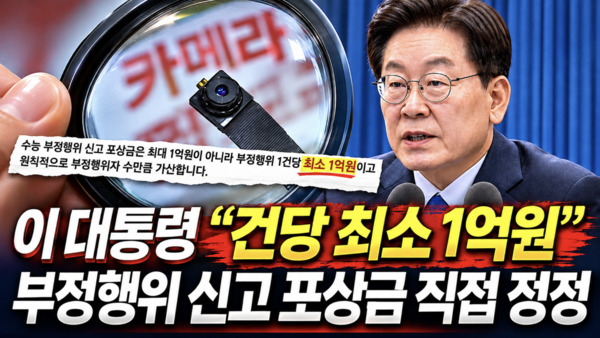
He added, “If someone involved in cheating voluntarily confesses and reports other accomplices, that person will receive a reduced penalty for their own misconduct while still being paid the full whistleblower reward.”
Lee stressed that “cheating on the CSAT is as serious a crime as corruption among public officials,” pledging to track down offenders and punish them severely. He also said measures would be introduced swiftly to prevent cheating using advanced electronic devices.
The following is a post published on social media on November 22 by Lee Jong-wook, a lawmaker from the opposition People Power Party, in response to the president's remarks. (Editor's note)
What is the underlying psychological mindset of a ruler who comes up with such an idea? I would like psychologists to analyze it.
“Report someone, and even if you are an accomplice, your punishment will be reduced, and you will receive hundreds of millions of won in reward money.”
Human beings cannot be trusted. Human beings are selfish. Human beings are capable of betraying one another when personal gain is at stake.
Could this be the view of human nature underlying such a policy?
Human beings cannot be left to govern themselves; they must be controlled.
Mutual surveillance is the most efficient means of control. By strengthening financial incentives, even trust among accomplices can be broken.
Could this thinking go even further, to the belief that any means can be justified in pursuit of a desired end?
The Lee Jae-myung administration's policies encouraging whistleblowing also raise questions about this philosophy of governance.
The government has included a new “Public Interest Whistleblowing Incentive Fund” in next year's budget and increased funding for various whistleblower rewards from 32.4 billion won this year to 254.6 billion won, an increase of nearly eightfold.
In effect, it is a fund designed to encourage mutual surveillance.
The way an individual ruler has lived his own life and the kind of society he intends to lead South Korea toward are entirely different matters.
Did the Korean people ever ask for a society in which citizens distrust and betray one another, monitor one another, and report one another to the authorities?
#SouthKorea #WhistleblowerRewards #SurveillanceState
* This article has been translated by ChatGPT.